The Throwback Tapes: Lakers vs. Knicks, Game 7 of the 1970 NBA Finals
One of the most exciting aspects of a project such as this one is that going into my watch of each game, I genuinely have no clue what it is I’m going to end up writing about. Saying this may come off like I’m presenting you with a cutesy sort of gimmick, but I assure you, it’s the truth. Of course, when an early-90s Chicago Bulls game eventually comes up on the schedule, it’s not as if I’m delusional enough to believe that there’s just as good of a chance that I’ll be writing about Will Perdue as there is that I’ll be writing about Michael Jordan, but you get the point I’m trying to make here, right?
Now sure, I could approach every matchup with more than just an inkling, a hunch or an expectation of what I’m going to write about. I could hide away a specific agenda in the back of my mind and you wouldn’t know otherwise, but my fear is that would end up smudging the lens through which I’m seeing the game, so to speak. I want to start each game with a clean slate. With as little bias and as few expectations as possible, so that way I can just let the story come to me… whatever that story may be.
It just so happens that during my watch of Game 7 of the 1970 NBA Finals — the first game in the Throwback Tapes series here on NBA Campfire — the story that came to me arrived both immediately and consistently throughout the game: Every single thing about this game feels like it happened 100 years ago.
If you haven’t already done the quick math in your head, this game actually took place 56 years ago. 100 years ago is admittedly a minor exaggeration, but take a second to think on it and you’ll see that it’s not as egregiously hyperbolic as it may sound. 1970 was actually closer to 1926 than it is to 2026, and the world has changed exponentially more in every facet of day-to-day life from 1970 to 2026 than it did from 1926 to 1970. It turns out, basketball may not be an exception.
What we’re gonna be doing here today is going over the twenty most 1970 things about this game. And before we get started, I just want to make something clear… I’m going to be poking fun, not just at some of the off-court stuff I observed while watching the original broadcast of this game, but also at some of the things I saw on the court. As it was made clear right on our home page, NBA Campfire is a place where all eras of basketball will receive the love and respect they deserve, because every player of every generation is a crucial thread in the fabric of this amazing game we love so much. With that said though, this is also a safe space to point certain things out that could potentially upset an older generation of readers. That doesn’t mean we’re diminishing anyone’s place in league lore.
To use a political comparison, we generally consider George Washington to be among the greatest Presidents in the soon-to-be 250 year history of the United States. Washington has maintained this status for two-and-a-half centuries despite the fact that he owned hundreds of slaves, lost all but one of his teeth and had replacements made of ivory, metal and animal teeth, and would’ve probably thought that the existence of dinosaurs was just as ridiculous of a notion as believing in flying, fire-breathing dragons. But despite some horribly outdated beliefs, and from the sounds of it, truly horrible dental hygiene, he’s been grandfathered into this discussion and that will likely never change.
So please, when I make the point near the end of this thing that Wilt Chamberlain dribbles a basketball like Stanley Hudson did on The Office, don’t get mad at me. Instead I’d suggest you just laugh, nod your head in agreement, and remember that without Wilt Chamberlain, there’s likely no Shaquille O’Neal, no Nikola Jokic, and no Victor Wembanyama.
The Twenty Most 1970 Things About Game 7 of the 1970 NBA Finals
I. “From Madison Square Garden in New York City, ABC brings you live and in color the final and climactic game in this exciting NBA championship series.”
That’s the very first thing we hear on the original broadcast of this game, and right out of the gate, there are three tell-tale signs this game happened a lonnnnnnng time ago.
“ABC brings you live…” - Believe it or not, live sports was not always considered the ratings gold-mine that it is now. In fact, the 1970 NBA Finals were the first in the history of the league to be broadcast live in its entirety throughout the country. Well, except for in New York City, where the game was blacked out on its local ABC affiliate, which is just super fucking inconvenient considering it is the biggest market in the country AND the very same city that the winning team played in.
“and in color…” - Gosh golly, color television! Can you believe it? A quick Google search informed me that it was 1965 when major television networks shifted their programming from black-and-white to color, but it wasn’t until 1972 when color televisions outsold black and white televisions in the United States. So even if this game was being broadcast in color, the majority of folks who watched it live that night were likely still watching it in black and white, which automatically makes this game appear as if it’s at least 100 years old.
“the final and climactic game in this exciting NBA championship series.” - My guy, just say it’s a Game 7! The best two words in sports! I don’t know exactly when ‘Game 7’ became its own sort of brand, but it feels like it should’ve happened at this point, because this was already the 10th Game 7 in NBA Finals history.
II. Lead play-by-play announcer Chris Schenkel kicks it to a pre-recorded interview with broadcasting icon Howard Cosell and New York Knicks head coach Red Holzman regarding the availability of Willis Reed, the Knicks captain and the MVP of the league during the 1969-70 season. Now obviously, any time Howard Cosell is involved with a sporting event — whether it be a football game, a boxing match, or in this case, “the final and climactic game of this exciting NBA championship series” — you know you’re digging deep into the archives, but Cosell’s presence isn’t what dated this game for me.
The photo I’ve attached below is of Red Holzman during this pre-game interview. Ideally, you haven’t scrolled below the photo, and if that’s the case, then don’t just yet. Take a good look at this man. Really study his face. And once you feel like you’ve drank Red Holzman in in his entirety, go ahead and venture your best guess how old he is.
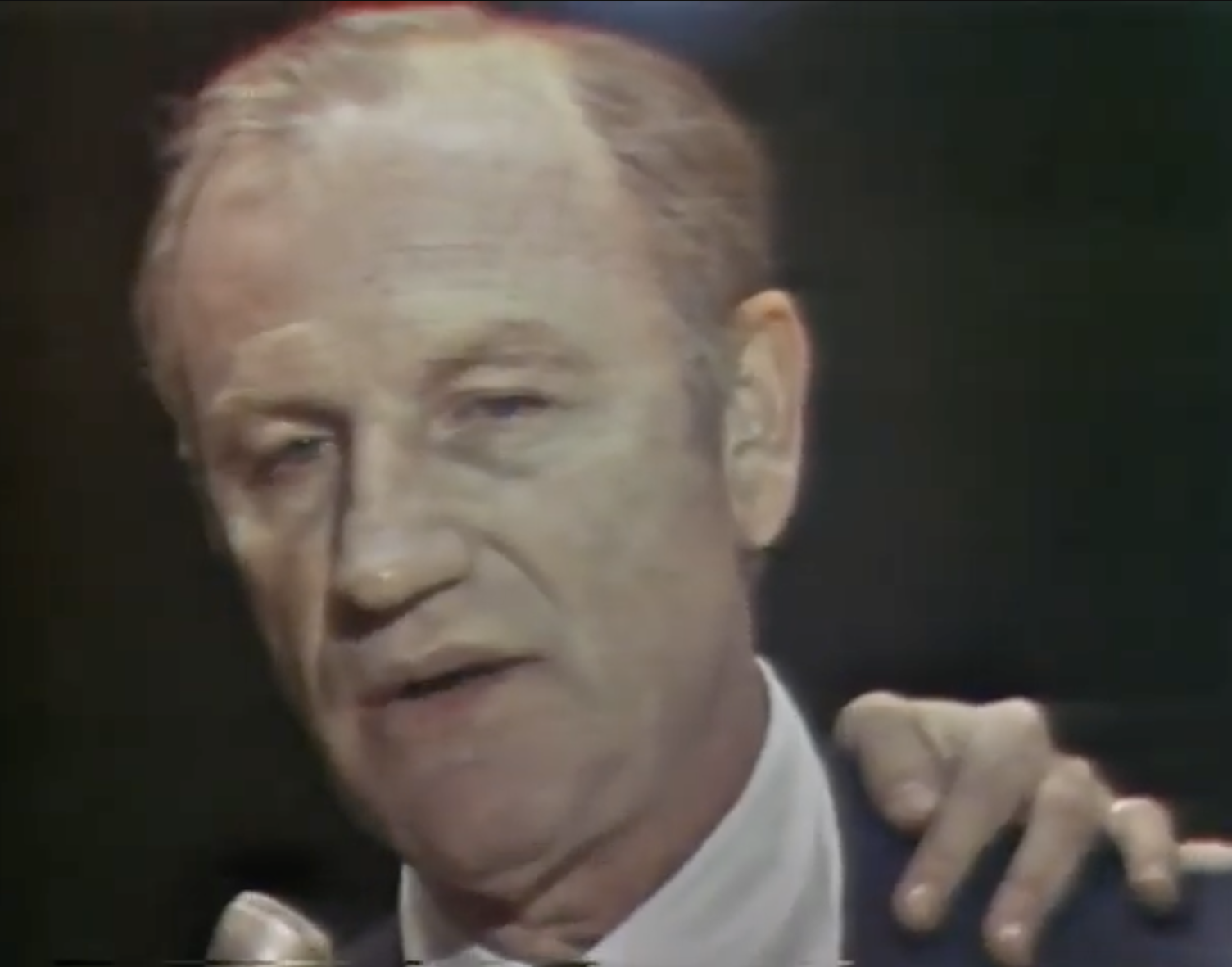
I could’ve sworn this was a 75-year-old man. Likely not even born in the 20th century. Without question a veteran of the First World War. Surely someone’s Grandpa, or depending on how young he and his wife got after it, maybe even a great grandpa.
I shit you not, this man right here is 49 years old.
And that right there may be the single most 1970 thing about this game. The fact that that man up there is in his forties is a surefire sign this game exists in a decade where just about everyone who was 35 years of age or older looked at least 25 years older than they actually were. I mean, you’ve all seen the side-by-side photos of George Blanda and Tom Brady, right?
III. Coming back from this truly stunning interview, Schenkel and his color commentator for the game, former NBA player Jack Twyman, address Willis Reed’s availability for the game. Twyman, who by all accounts is one of the great human beings to ever be involved in the National Basketball Association, relays some information he was given regarding New York’s attempt to get the hobbled Reed ready for this game, noting that Reed was given a 200cc injection of Cortisone in the Knicks locker room.
Maybe there’s someone reading along who immediately caught that Twyman was either fed faulty information or he just totally biffed it. I was not one of those individuals. It wasn’t until later in the game, when Twyman corrected himself and explained that Reed actually received a 2cc injection of Cortisone, not a 200cc injection, that I realize there’s a very real chance that ABC did not have a single fact checker or producer monitoring anything that Twyman or Schenkel said throughout the broadcast, because it took them 90 minutes of real time to realize that Twyman had suggested Reed received 100 times more Cortisone than he actually did, which would’ve been a catastrophic example of medical malpractice.
How bad, you ask? Well, I checked in with my fiancee — Maria, a Physician Assistant for six years now — and asked her what would happen if someone received 200cc of Cortisone when the intended dose was actually 2cc. Now before you read her response, there are three things you should know about my fiancee:
First, she’s great at what she does and she takes it very seriously. Sometimes just to get under her skin I like to pretend I could be a Physician Assistant too because I’ve watched ER all the way through three times. I say a bunch of medical terms that I heard frequently on the show — Chem 7, CBC, Asystole — just to act like I know what I’m talking about. It’s great fun.
Second, 90 percent of the time, she doesn’t care about basketball at all.
Third, and bless her heart, she’s remarkably blunt.
With all of that said, this was her response to my inquiry:
“He would be fucking dead. His heart would explode.”
Man, this game would’ve taken a sharp turn toward negative town if it was the Knicks medical staff that fucked up, and not Jack Twyman. The entire Garden Party would’ve been ruined.
IV. The starting lineups for the game are revealed, and boy oh boy, if you read these names, it’s a dead fucking giveaway this game is not happening in the 21st century. The first names only are: Jerry, Dick, Keith, Elgin, Wilt, Dave, Bill, Walt, Willis, and ANOTHER Dick. That’s right, two Dicks in one game. For the sake of optics, I don’t think the NBA has allowed that to happen since the merger with the ABA. And for the record, off the bench we had fellas named Happy, Cazzie, Nate, Mike, John AND Johnny, and another Dave. Honestly, with names like those, 1970 might be the latest date that this game could’ve occurred.
V. For good reason, Willis Reed receives a prolonged applause from the crowd at MSG during starting lineup introductions, which predictably features no pyrotechnics, no flashing lights, no smoke machines, no fire, no hype video, no cheerleaders and no music. When I played my last high school basketball game 16 years ago, there was more put into the production of our starting lineup introductions than there was at Madison Square Garden. For Game 7. Of the NBA Finals.
VI. Let’s talk about Willis Reed for a minute, because if you’re at all familiar with the story of this game, then you know Reed’s presence in the Knicks lineup — and perhaps apocryphally, the reaction of Lakers players to seeing Reed make his way onto the floor as the teams were warming up — was what propelled New York to the 1970 NBA Title. Reed missed Game 6 because of what was eventually revealed to be a torn quadricep muscle, specifically the rectus femoris, which connects the hip to the knee. Without the Knicks captain in the lineup, Wilt Chamberlain rampaged his way to a 45 point, 27 rebound performance, with Jerry West adding in 33 points and 13 assists. This injury understandably left Reed’s status for Game 7 in doubt, but with enough Cortisone coursing through his veins to power every single one of the elephants Alexander the Great used during the Battle of Hydaspes, Reed was able to take the court and knock down a pair of buckets to start the game.
In total, Reed played 27 minutes in Game 7, which is a feat of the kind of toughness and resilience that I would know nothing about. If I tore my quadricep muscle four days ago, I promise you I wouldn’t even be writing this column, let alone suiting up for a basketball game. But here’s the point I wanted to make about Willis Reed in relation to the theme of various pieces of this game feeling very much like 1970. There is not a snowball’s chance in hell that a player with a torn quadricep would be allowed anywhere near their uniform in 2026, and they damn sure wouldn’t be relied on to play the first 20 minutes of the game without coming off the floor, like Red Holzman had Reed doing in Game 7. I chalk that decision up to Holzman’s age-related dementia. Or maybe it’s just because it was 1970 and the prevailing thought back then may have been, Who needs a functional thigh to play basketball, anyway?
Hey, speaking of thighs…
VII. I have to warn you, if you watch this game, your focus will inevitably shift to all of the exposed thigh that is on display throughout this game. My lord, props to all of these legends because they were practically playing in speedos. I’m not sure what YouTube’s restrictions are regarding nudity, but I’m pretty confident this game tightropes that line, and because I don’t want to have to tag this post NSFW, I’m not going to include any still shots either. Just to be safe.
VIII. This is point #8, and coincidentally, ‘eight’ might be the total number of times the word ‘Knicks’ was said during this entire broadcast. Schenkel, Twyman, Cosell and everyone else who spoke into a microphone during these two and a half hours made good use of the full original nickname, the Knickerbockers, even though the Knicks dropped their Father Knickerbocker logo in 1964. If we’re power ranking the best name-oriented marketing decisions of the last 60 years, the Knicks dropping the erbockers is right on par with Facebook dropping the The.
Now, with the game having tipped off, here are five things that immediately stuck out from both a broadcast and gameplay perspective:
IX There was no three-point line. Even though the ABA had introduced the three-point line in its first year of existence in 1967-68, the NBA wouldn’t add this wrinkle to its game until the 1979-80 season. What a bunch of prudes.
X. Three-to-make-two and two-to-make-one free throws were still in effect, which is great for all of the hoops fans out there who love watching teams take an abundance of shots from the foul line, which given today’s discourse, it doesn’t seem like there are many of us out there. In this game alone, there were 61 combined free throw attempts by the Knickerbockers and Lakers, which was actually below the 1969-70 season average of 67 per game. For what it’s worth, that number was only 47 attempts per game during the 2025-26 campaign.
XI. There was a jump ball to start every quarter, which is a minor thing, but also a really dumb thing that the league didn’t get rid of until 1975. To be honest, if today the NBA announced they were getting rid of the opening jump ball, I wouldn’t even be super bummed about it. But at the college level they can never change it for as long as ‘One Shining Moment’ is used for the end of March Madness. The whole song would make no sense if there was no jump ball to start the game but the opening line remained, “The ball is tipped.”
XII. There was virtually no flopping, no foul baiting, no complaining to officials, and literally no index finger being wagged in a circular motion to plead for a review on the play because there were no goddamn reviews. And you know what, I think after having watched this game I’ve officially arrived at the point where I’m comfortable saying, Let’s just get rid of all reviews. Yeah, that’s where I am. There’s going to be some folks in the pro-review crowd who would (correctly) assert that without reviews the refs are inevitably going to get some shit wrong, but the refs get plenty of shit wrong now, and even worse, sometimes the shit they get wrong is shit they’ve already reviewed. I say we just keep the game moving along with proper flow and pace, and just accept the fact that, by and large, refs stink.
XIII. There was no consistent score bug or view of either the game clock or shot clock, which makes for a tremendously disorienting viewing experience, especially when you’re trying to take notes as you’re watching and have no clue how you’re supposed to identify when certain things happened in the game, especially since neither Chris Schenkel or Jack Twyman seemed all that interested in relaying the time and/or score of the game to viewers with any degree of consistency.
XIV. So, as I said before, I watched the original broadcast of this game, and that meant that commercials were part of the experience. And let me tell you, by about the third commercial break of the game, I found myself utterly riveted waiting to see what sort of product was going to be advertised next, and how mind-numbingly boring the commercial itself was going to be. Boy were they bland!
In total, there were just 29 total commercials — thanks to some quick Google sleuthing, I found that there are roughly 70 individual commercials during a standard NBA game today — and these were the 22 products that were advertised:
Rise Shaving Cream (x2), Salem Cigarettes, Sears Dynaglass Tires (x3), Arrow Colorful White T-Shirts (x2), STP Gas Treatment (x2), Brylcreem, Winston Cigarettes, Noxzema Shaving Cream (x2), Lucite Wall Paint, Rally Cream Car Wax, Buick LeSabre, Trans World Airlines, Sears Steel-Belted Radial Tires, Kodak Cameras and Film, Kodel Polyester Fabric, Pepsi Cola (x2), American Express Credit Cards, Venture Hair Product, Schick Super Chromium Razor Blades, White Owl Cigars, Desenex Foot Spray, Allerest Allergy Tablets
Well, I think we’ve officially found the most 1970 thing about this game, and it’s a 22-way tie!
XV. Chris Schenkel described Knickerbockers forward Bill Bradley as “moving sprightly” during this game. I have to believe that this was the last time someone said “moving sprightly” on national television.
XVI. Okay, let’s talk about some of the players in this game. Again, I’d like to reiterate that if you’ve taken a seat around the NBA Campfire, then this will always be a place where every era of basketball is celebrated… with that said, this isn’t the place to be naive, and it’s just the truth that there are quite a few historically great players on the floor whose skillsets just wouldn’t cut it in a more modern era of professional basketball. By my count, I saw two players who could still play high level basketball if they were dropped into 2026 via time machine in their 1970 form.
Walt Frazier - If you’re going to watch just one Walt Frazier game, this is the one to pick. The coolest man in New York City was outshined on this night by the gutsy performance of Willis Reed, but nobody outplayed Clyde in Game 7. Frazier finished with 36 points, 7 rebounds, 19 assists and 5 steals, and that stat line was only moderately more impressive than his actual performance. There were three things in particular that stood out about Clyde in this game:
He always made the right play, particularly in transition, and it seemed like there was nothing you could do to speed him up. He was playing at his own pace this entire game. Related to that…
One thing we like to note about certain high-level, top-tier point guards is their ability to ‘get to their spot.’ Think about how Chris Paul or Shai Gilgeous-Alexander are so adept at working their way into a mid-range jumper. Frazier is one of the early examples of that. Once he crossed half-court, he was comfortable putting the defender on his hip, backing him down until he got into the 14-to-18-foot range, and that was his sweet spot. The analytics might not love a contested mid-range jumper, but Clyde’s was money.
Frazier’s defensive instincts were second to none. I was stunned to see that he finished with only 5 steals in this game. It felt like he had way more, and that might be because every single one of his steals led to transition points for the Knickerbockers. As I watched, it felt like he could fit in nicely with modern-day teams that send pressure at ball-handlers right as they cross the mid-court line.
Jerry West - It’s no wonder the NBA modeled its logo after a silhouette of West in 1969, because this dude was everything you want in a hooper. Silky jumper (if you’re building a list of guys from the 60s and 70s who would’ve benefited from having a three point line, West is right near the top), tight handle, willing and capable passer, long arms, decent size, fiery competitive streak, and some craftiness as a finisher in the painted area (Hubie Brown™)… all of it was on display at points during Game 7, and it wasn’t even close to being the best West performance I’ve watched.
Now I know what you’re probably thinking… Bro, what about Wilt Chamberlain? Look, Wilt’s legacy is secure. Nothing I say here is meant to, or is going to diminish what he accomplished during his 14 years in the NBA. He was by far the most physically dominant player of the first 30 years of pro basketball, and even though you don’t need me to run through his accolades, I will anyway:
31,419 points (8th all-time), 23,924 rebounds (1st all-time, and I’m as close to 100% certain as I can be when I say that this record will never be broken), 26.2 career PER (8th-highest all-time) four-time league MVP, 10-time All-NBA, 13-time All-Star, highest single-game scoring performance, averaged 50.4 points and 25.7 rebounds per game in his third NBA season, two-time NBA champion
All I’m going to tell you is this: he dribbled the ball like Stanley Hudson, his go-to-move appeared to be an ugly post-up finger roll that ricocheted hard off the rim every time he shot it, and he still finished 21 points and 24 rebounds. Impressive box score, uninspiring performance. At this stage of his career, Wilt was basically the equivalent of present-day DeAndre Jordan.
XVII. I’m ashamed of myself, because I just got done writing at length about Walt Frazier, and I didn’t even mention his oh-so-70s mutton-chop facial hair. If NBA Campfire gets to 10,000 social media followers — or if NBA Campfire Hoopertheticals sells 1,000 copies — by next year at this time, I’ll rock the muttonchops at my wedding in September 2027. Hand to God.
XVIII. As the game neared its conclusion, two things happened that don’t happen in NBA arenas anymore. First, the MSG crowd began chanting “We’re Number One!” which sounded so innocent and simple and hokey as it was echoing through the World’s Most Famous Arena. It was just adorable. It reminded me of hearing chants like “Be Aggressive! B-E Aggressive! B-E-AGGR-ESSIVE!” and “Good job! Good job, boys! Good job! Good job!” during high school basketball games. It was a far cry from the 2026 NBA Finals, when Knickerbocker fans were routinely serenading Victor Wembanyama with “Fuck You Wemby!” chants. Pardon their French.
Then, in an act that was simultaneously less adorable, equally dated, and so badly missed, in a state of championship-induced delirium, Knickerbocker fans stormed the court to celebrate the victory and even managed to stampede their way into the tunnel as players from both teams rushed back to the locker rooms, which is a scene that would look like a horror movie if it happened anytime after the Malice at the Palace. Although I understand why it’s banned nowadays, I’m pro-court storming. It’s like alcohol. I get that it’s often dangerous and harmful, but it’s fun and I like it.
XIX. Chris Schenkel noted that the Knickerbockers roster would be receiving $48,000 to split for having won the NBA Title. In 2018, after the Golden State Warriors won their second straight championship, they spent over $400,000 on the champagne they would be spraying all over themselves during their locker room celebration.
XX. As a child of the 90s who spent so many hours fantasizing about the different sporting events of the past that I so badly wanted the opportunity to watch, I was excited to kick off Throwback Tapes with a game that is routinely referred to as one of the best in the long history of the National Basketball Association. Fundamentally, I understand why this game is held in such high regard. It’s a Game 7 between the two biggest markets and two of the most prestigious franchises in the league. It was contested at the Mecca of Basketball. It featured six players who were named to the NBA’s 50th and 75th Anniversary Teams. It featured an all-time ‘Holy Shit’ moment (Willis Reed’s gutsy trot onto the court), an all-time ‘Holy Shit’ performance (Walt Frazier’s two-way masterpiece), and an all-time ‘Holy Shit’ pre-game interview (Because I still can’t believe that Red Holzman was only 49 years old.)
But here’s what I learned during this watch… what is actually the most 1970 thing about this game, even beyond the names of the players, the outdated commercials, the style of play and everything else we’ve covered here it its legacy. This game took place at the beginning of a transformative, albeit rocky ten-year period where the NBA’s most prominent dynasty (the Bill Russell-led Boston Celtics) took something resembling a step backward compared to where it was during the previous decade. Widespread interest in the league started to deteriorate throughout the seventies thanks to over-expansion, a watered down talent pool courtesy of the ABA, a looming drug problem, subpar television coverage, a lack of compelling rivalries, and a predominantly white audience that wasn’t quite ready to be spending so much time watching and supporting a predominantly black league.
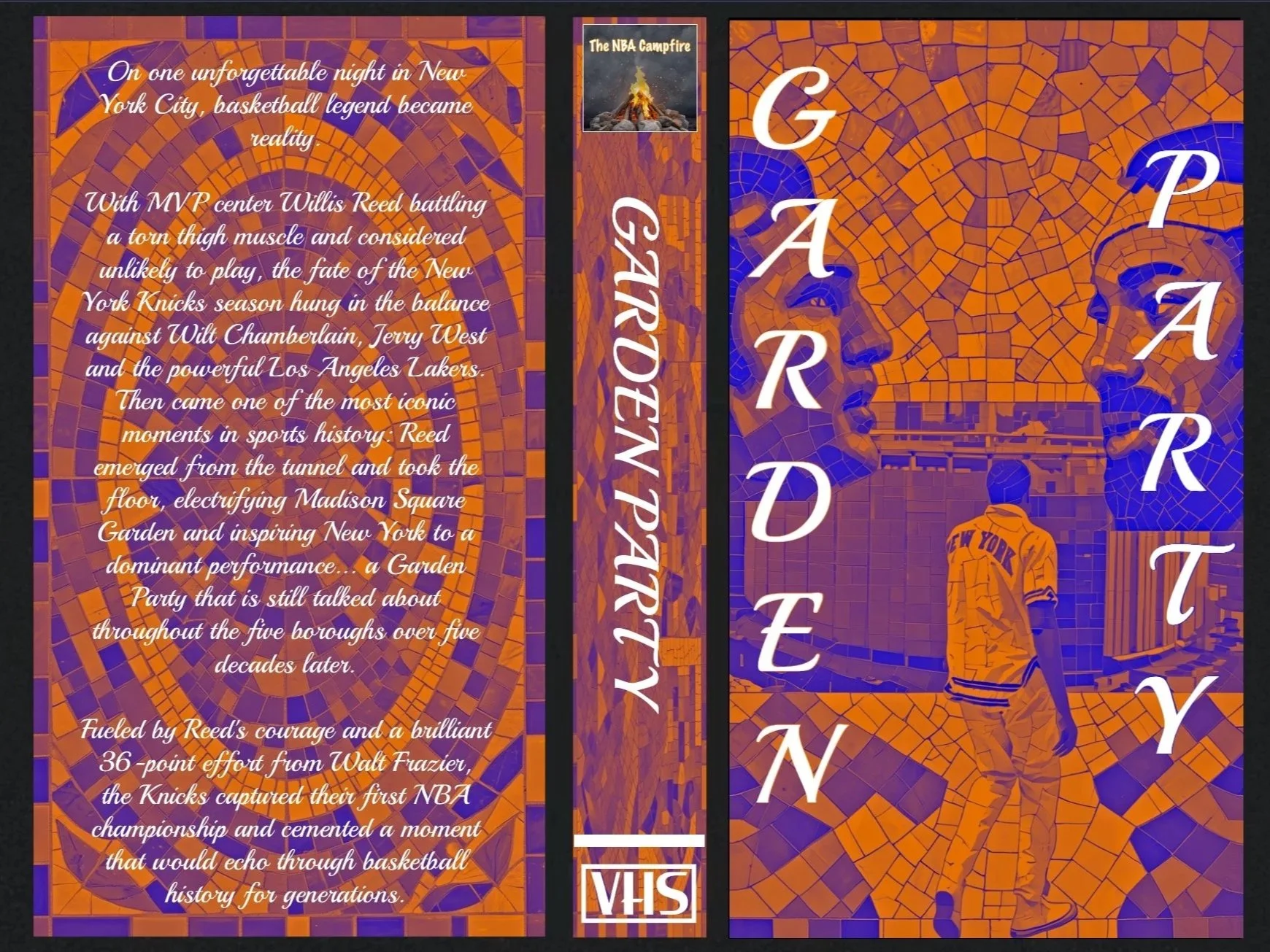
This Game 7 at MSG was more than just a matchup between two teams vying for an NBA Title in a do-or-die setting. It was the singular showdown that the league could’ve only hoped for. One that highlighted all that the National Basketball Association could be. A Garden Party where the absurd collection of star power in Los Angeles would be pitted against the beautiful team basketball of New York with the richest prize in the sport hanging in the balance, broadcast live and in color for audiences from coast to coast to be able to see. This game was the beacon of optimism that the NBA needed, and even if from a quality of play perspective it couldn’t possibly reach that mark, the NBA has continued to treat it as such.
Next Up on Throwback Tapes: ‘It’s Magic’ (July 9th)