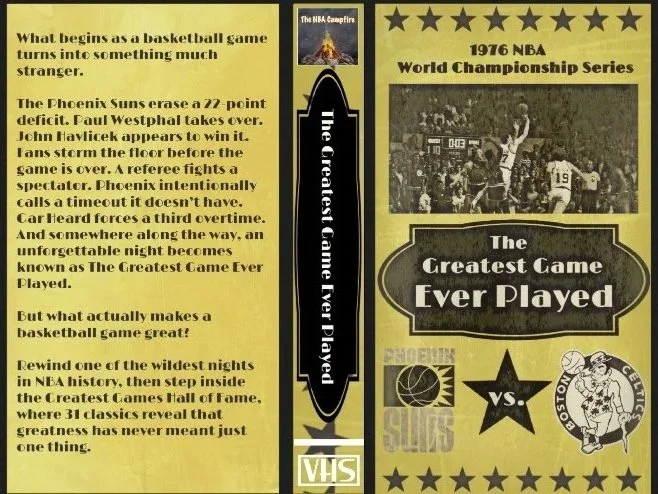
With fewer than four minutes remaining in Game 5 of the 1976 NBA Finals, the Boston Celtics appeared to have finally gotten rid of the Phoenix Suns.
This was not the first time it looked this way. Not only had the mighty Boston Celtics —in the final year of a five season run in which they won at least 54 games in the regular season and advanced to at least the Eastern Conference Finals — jumped out to a 2-0 series lead against the 42-win Western Conference champs, but in this particular game, Boston built a 22-point lead in the first half, and had subsequently survived and squashed every single run the pesky Suns threatened with. And now, after John Havlicek buried a baseline jumper, Boston was back ahead by nine with the finish line in sight.
Then Paul Westphal decided that this game was not going to have a normal ending.
Westphal, a player whose career has largely been forgotten to history despite five All-Star appearances and four All-NBA nods, hit a turnaround jumper to cut the lead to seven. At the other end, Dave Cowens, Boston’s undersized All-NBA center, missed a layup, and Westphal came down and hit another jumper. Suddenly, a nine-point lead turned into a five-point lead, and the view of the finish line had gotten a little blurrier. Soon after, Westphal cashed another jumper off the glass and Boston’s lead was down to three.
There are moments in old basketball games when you can feel history beginning to recognize itself. Nobody in the building knows what is coming yet. The announcers are still calling possessions instead of creating mythology. The crowd is reacting to the game in front of it rather than the story it will eventually tell about that game. But you can feel the temperature changing.
This was one of those moments.
With Boston bringing the ball up the floor clinging to a three-point lead, Westphal picked up Charlie Scott full court. Scott crossed the half court line and Westphal, now behind him, swiped the ball away. Phoenix recovered the loose ball and a few seconds later Westphal was streaking toward the Suns basket again and finishing with an acrobatic lay-up plus the harm.
(Before we continue, did you happen to notice that absolutely immaculate afro on the head of the Suns trainer who came onto the court and gave a towel to Westphal after the play? The fucking seventies, man. Legendary.)
Westphal’s free throw tied the game at 94, and just 39 seconds remained.
Approximately two hours earlier, there had been absolutely no reason to believe any of this was coming. In fact, for a suspiciously long time, ‘The Greatest Game Ever Played’ looked like it was going to become a very forgettable Game 5.
The Celtics came out in Game 5 like a team with an organizational track record of finishing off high-leverage games. A team laden with Hall of Famers. A team poised to hoist another championship banner into the rafters of the Boston Garden.
John Havlicek, 36 years old and making his first start of the series, looked approximately ten years younger. Boston pressed after made baskets, moved the ball before Phoenix could get set defensively, and turned the opening quarter into something dangerously close to a public execution. The Celtics led 28–10. Then 36–18. Eventually, the margin reached 22, and if you had turned the game off there, nobody could have blamed you.
You just would have missed the part where this basketball game lost its fucking mind.
To their credit, the Suns did not respond to being buried alive by behaving like a team that was six feet under. Instead, they started running.
Boston’s pressure had dictated the first quarter, but once Phoenix began getting stops and pushing the ball before the Celtics could organize themselves on the defensive end, the game started to look a little less like an execution and a little more like the sort of reckless track meet the Suns could actually survive. Gar Heard started making shots. Curtis Perry found opportunities in transition. Ricky Sobers and his deliciously seventies gold chain attacked the basket. Westphal kept poking around for openings.
And, slowly, the giant green lead began shrinking.
At 46–39, Phoenix had gotten close enough that Boston coach Tom Heinsohn called timeout, which felt like a minor victory in itself for the Suns. For most of the night, the Celtics had been the team applying pressure. Now, for the first time, Phoenix had made Boston uncomfortable enough to stop the game and talk about it.
This would become the basic rhythm of the next two quarters.
Phoenix would make a run. Boston would answer. Phoenix would get close enough to make everybody in the Garden nervous. Boston would push them away again.
Every time the Suns appeared ready to turn this into something, Havlicek would make a shot, Cowens would find somebody cutting, Jo Jo White would settle things down, or Phoenix would commit the sort of mistake that reminded you why Boston had spent the decade collecting championship banners while the Suns were still trying to shed the label of a team that didn’t belong in the Finals.
But Phoenix kept coming, and that may be the most important thing to understand about everything that happens next. The Suns never really seized control of Game 5. They just refused to allow Boston to keep it.
They hung around long enough for the game to become unstable.
By the fourth quarter, that instability had started showing up everywhere. Bodies were hitting the floor. Fouls were accumulating. The crowd was getting louder. The basketball itself wasn’t necessarily becoming better, but the game was becoming more combustible. But still, Boston appeared to have an answer.
With fewer than four minutes remaining, the Celtics had rebuilt their lead to nine. Phoenix had spent almost the entire night climbing uphill, only to look up and discover that Boston had somehow moved the top of the hill farther away.
Havlicek buried a baseline jumper and the lead swelled back to nine. But we know what happened next.
Westphal hit the turnaround. Cowens missed. Westphal hit again… and then again. Then came the steal. The layup. The foul. Brent Musburger’s cracking voice.
And now, after nearly an entire night spent chasing the Celtics, Paul Westphal stood at the free-throw line with a chance to erase the last remaining piece of Boston’s lead.
And from this point forward, Game 5 stopped behaving like a normal basketball game.
Boston’s largest lead of the night was 22 points, but with 22 seconds left, the Suns took their first lead of the game. Dave Cowens was whistled for a foul while battling for rebounding position, sending Curtis Perry to the free throw line. Perry made one of two, and after spending almost the entire night chasing the Celtics, the Suns had finally caught them and, for the first time, passed them in this track meet.
The lead lasted approximately three seconds.
John Havlicek attacked at the other end and drew a foul on Alvan Adams, Phoenix’s rookie center, who became the latest player to have his evening ended by the whistle. Havlicek made the first free throw to tie the game at 95, but then missed the second.
Boston got the ball back anyway.
This should have been the moment when the Celtics calmly held for the final shot. They had possession, the game was tied, the clock was theirs to kill, and they had been in this position lord knows how many times.
Instead, even the Celtics succumbed to the weirdness of this game.
Havlicek eventually got the ball back and fired with roughly eight seconds remaining, far earlier than Boston needed to. He missed. Westphal secured the rebound and immediately called timeout, but Phoenix’s final possession went nowhere. At 95 apiece, we were headed to overtime.
What followed was a tense, albeit fairly standard overtime period in a pivotal NBA Finals game. But those five additional minutes failed to produce a winner.
So now, as we welcomed in a second overtime, Brent Musburger greeted the occasion by announcing, “We may play all night here in the Boston Garden,” before advising any children still watching to tell their fathers to go get them another Coca-Cola.
He was joking.
But only sort of.
The second overtime started and immediately followed suit of the first OT. Jo Jo White made a jumper. Ricky Sobers and his gold chain answered. Dave Cowens, already playing with five fouls, finally picked up his sixth and was gone. Suns big man Dennis Awtrey soon joined him. Every whistle removed another body from the game and made whatever came next feel a little less predictable.
Eventually, the game reached a point where there was no possible way to predict what was going to come next. Allow me to set the scene:
With 19 seconds left in the second overtime of the game, the Celtics led by three. And this is the point where I am going to stop trying to describe what happened on the parquet floor of the Boston Garden.
Not because there isn’t more to say.
Because there is far too much to say.
Over the next few minutes, the Boston Garden will experience a clutch jumper by a man named Dick, a remarkably clutch defensive play, one go-ahead basket, another go-ahead basket, a premature court storm, a referee fighting a fan, a clock dispute, an intentional illegal timeout, a technical free throw, one of the most absurd strategic decisions in Finals history, and a shot that sends the game into a third overtime.
I promise you, all of this happens with the six and a half minute long video below.
So please enjoy the following documentary footage of a basketball game experiencing a complete fucking psychological breakdown.
Roll the fucking tape.
Somehow, there were still five more minutes to play, but by now, nobody looked fresh enough to participate in another five minutes of anything.
Boston eventually found the separation it had been searching for all night. Jo Jo White kept making shots. Phoenix kept dragging itself back. Westphal managed to hit a spinning banker and then converted another layup to keep the Suns alive.
With 12 seconds remaining, Phoenix had one final opportunity to steal the game. All that needed to happen was for Paul Westphal to steal the ball again, and that mother fucker nearly did.
But this time, Boston held on. The clock finally reached zero.
Celtics 128, Suns 126.
Three overtimes.
Two court storms.
And finally, one actual ending.
I’ve watched better basketball games. I’ve watched prettier basketball games. I’ve watched games featuring greater individual performances, cleaner execution, higher stakes and more talented players.
And yet, when the whole thing finally ended, I had no trouble understanding why people have spent the last half-century calling this ‘The Greatest Game Ever Played.’
Which created a problem in my basketball-obsessed brain.
Greatest by what measurement?
We tend to use the word ‘greatest’ as though it were a measurement. As though somewhere there exists a basketball-game formula into which we can enter stakes, shotmaking, star power, competitiveness, historical importance, degree of difficulty and number of referees who were assaulted by spectators, and eventually a machine spits out a number.
97.6. Congratulations. This was the greatest basketball game ever.
But that isn’t how we actually experience these things.
We don’t remember great games as weighted averages. We remember what they became. A duel. A comeback. A survival test. A masterpiece. A disaster. A single shot that swallowed everything around it. Two teams refusing to let the night end.
Different games become unforgettable for completely different reasons, which makes trying to squeeze all of them onto the same scale feel increasingly ridiculous.
Therefore, it’s my belief that the term ‘Greatest’ shouldn’t be used as a unit of measurement. It’s a genre.
“The Greatest Game Ever Played” sounds like a distinction that should come with a championship belt. One game possesses it until another game comes along, concludes with a more iconic shot, survives an extra overtime period or produces an even more ridiculous ending, at which point we rip the title away and hand it to somebody else.
But why should there only be one?
The Rock & Roll Hall of Fame did not admit Prince and announce that, regrettably, Jimi Hendrix is no longer a Hall of Famer. The Pro Football Hall of Fame didn’t remove Joe Montana’s bronze bust from the building after Tom Brady was inducted.
Greatness does not — and should not — require exclusivity.
So maybe ‘The Greatest Game Ever Played’ was never really a title to defend. Instead, it’s a standard against which other games could be admitted. And if that is true, then Game 5 of the 1976 NBA Finals deserves a different distinction.
Not champion, but founding member.
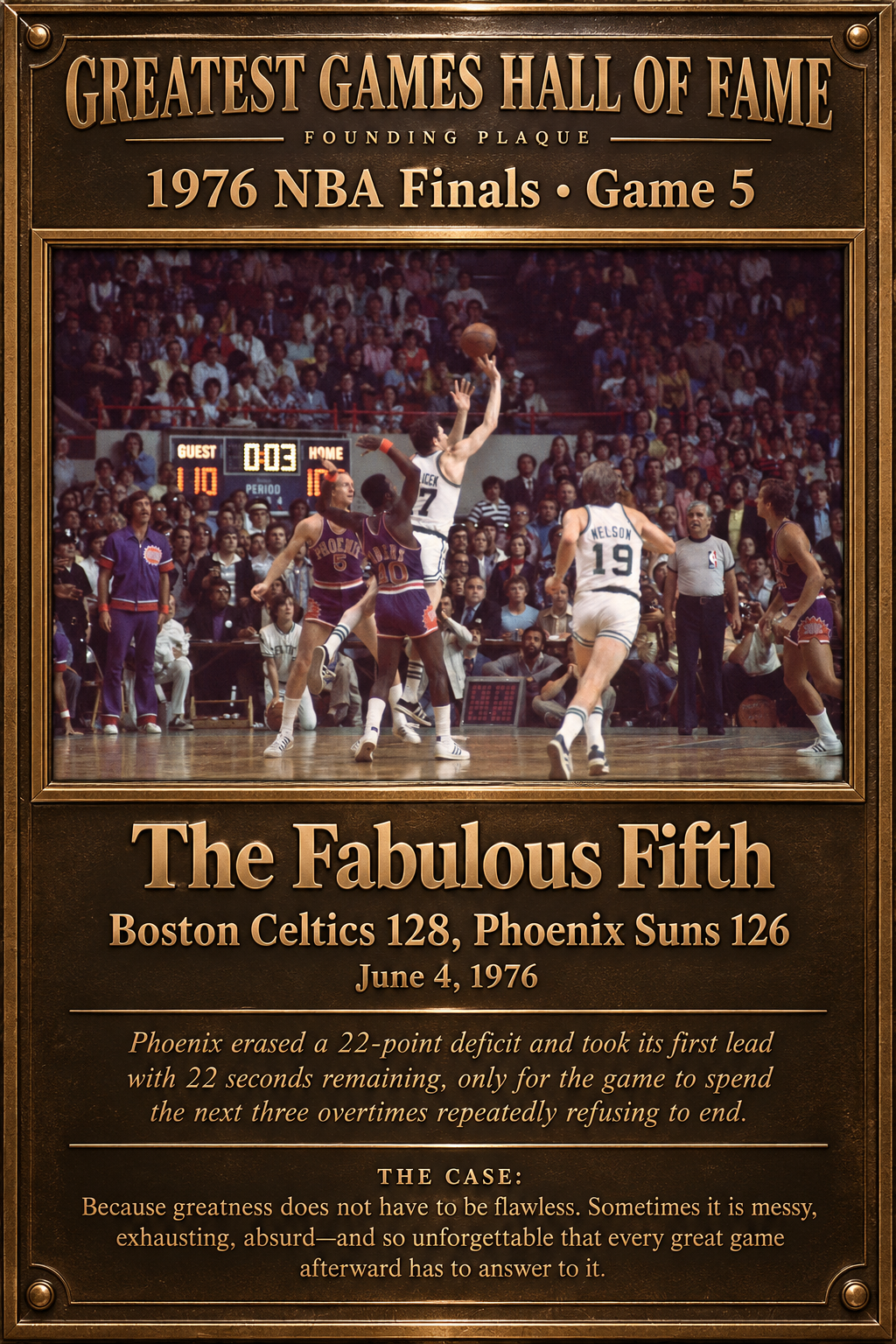
So in the spirit of this distinction, I have built a museum...
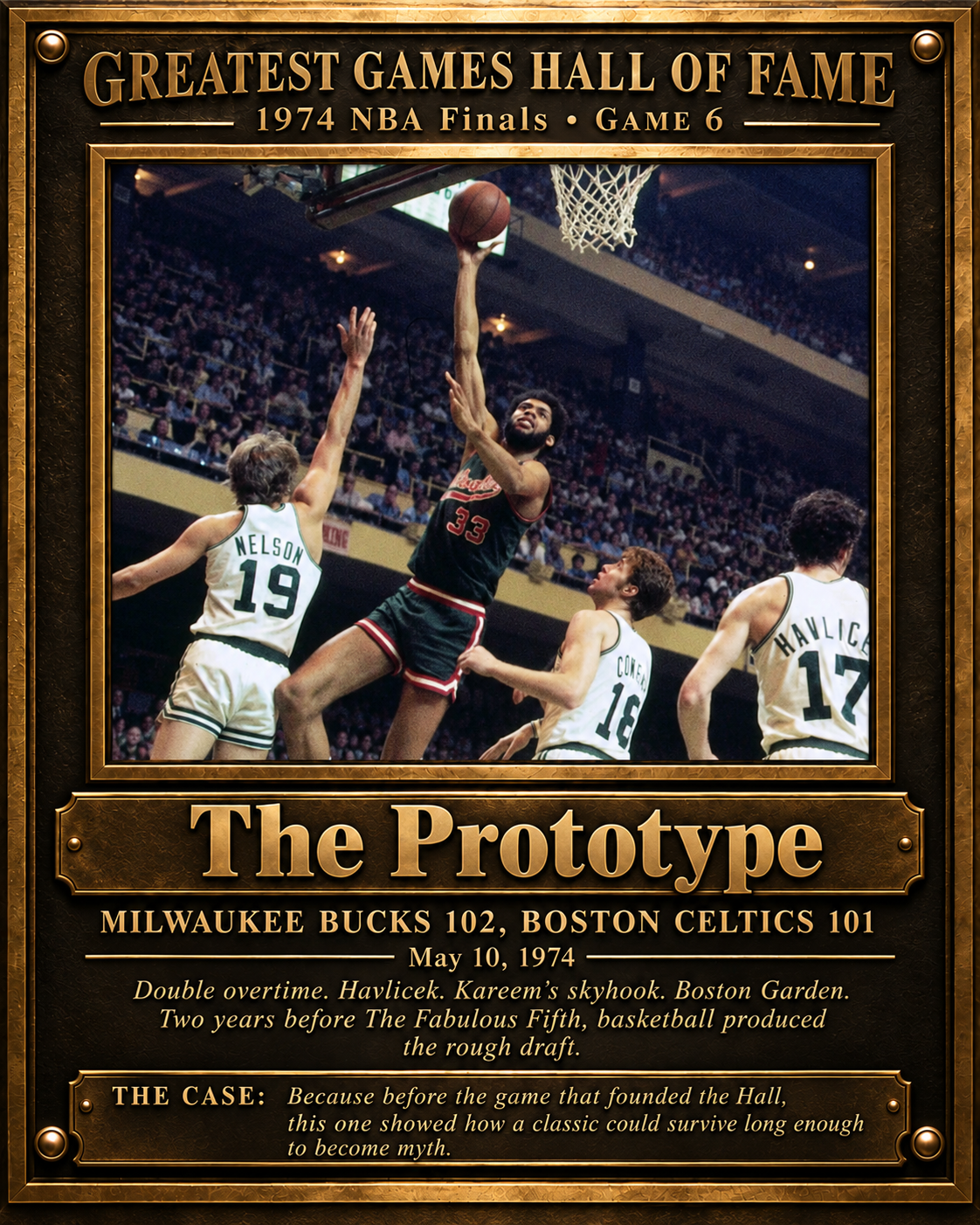
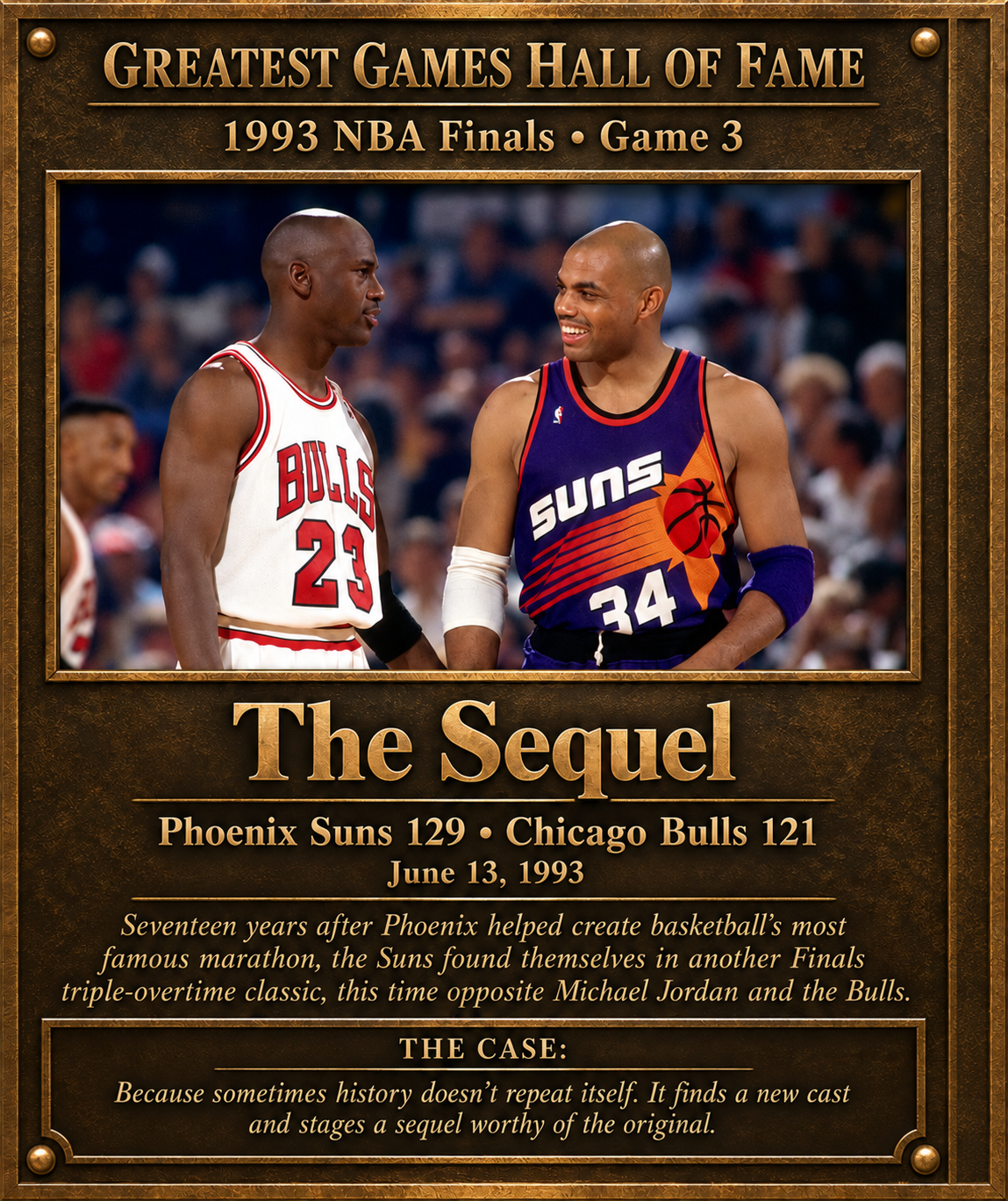
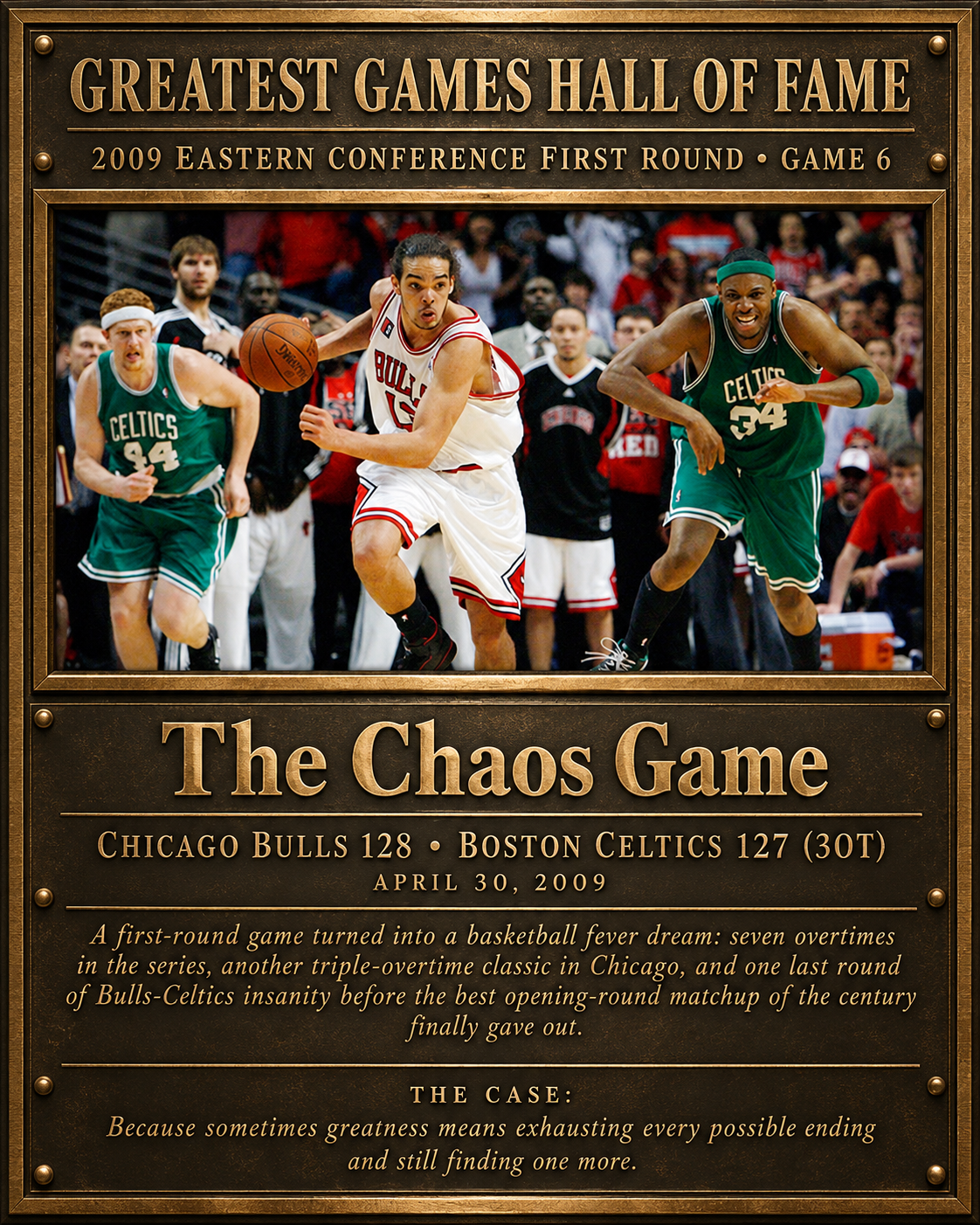
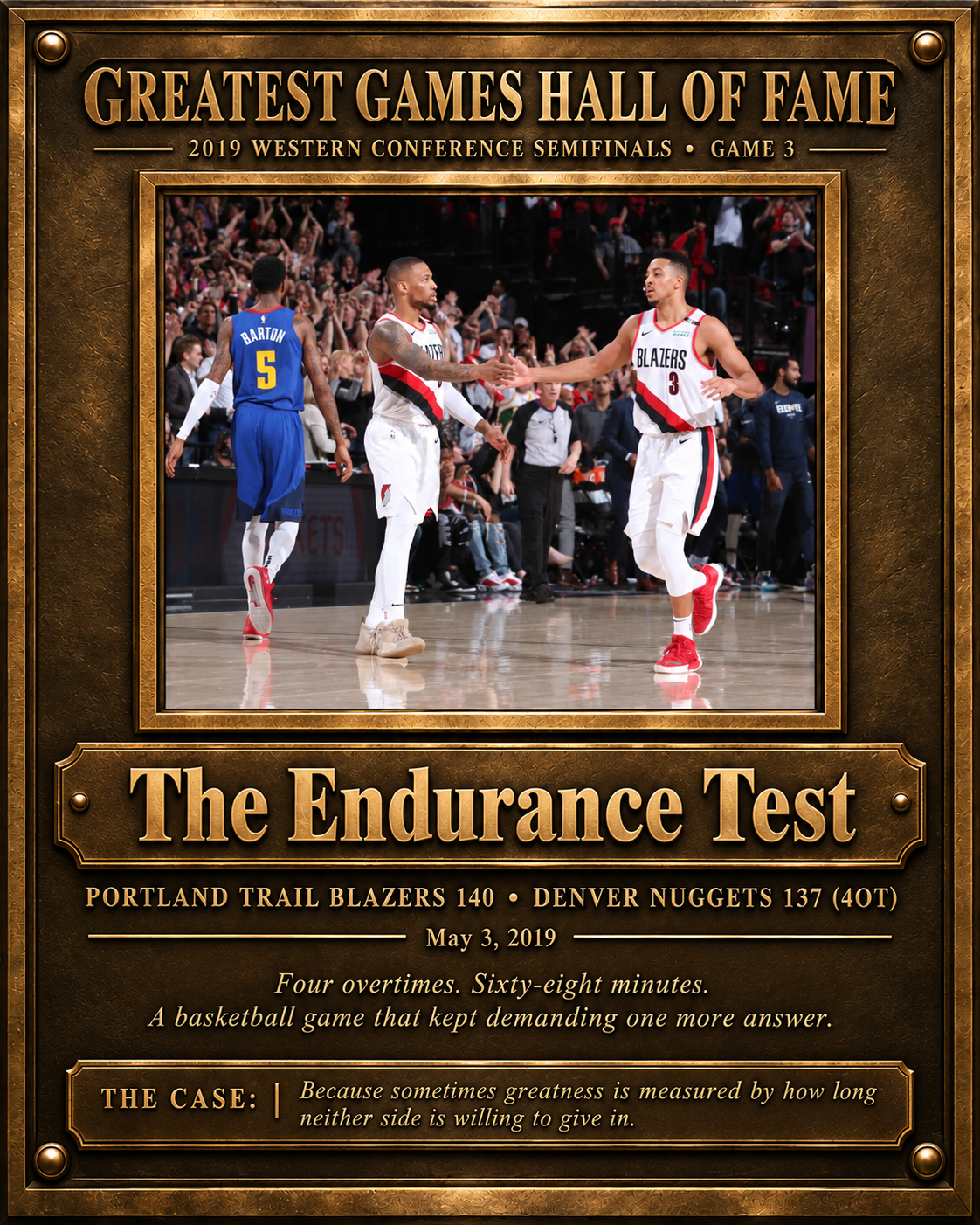
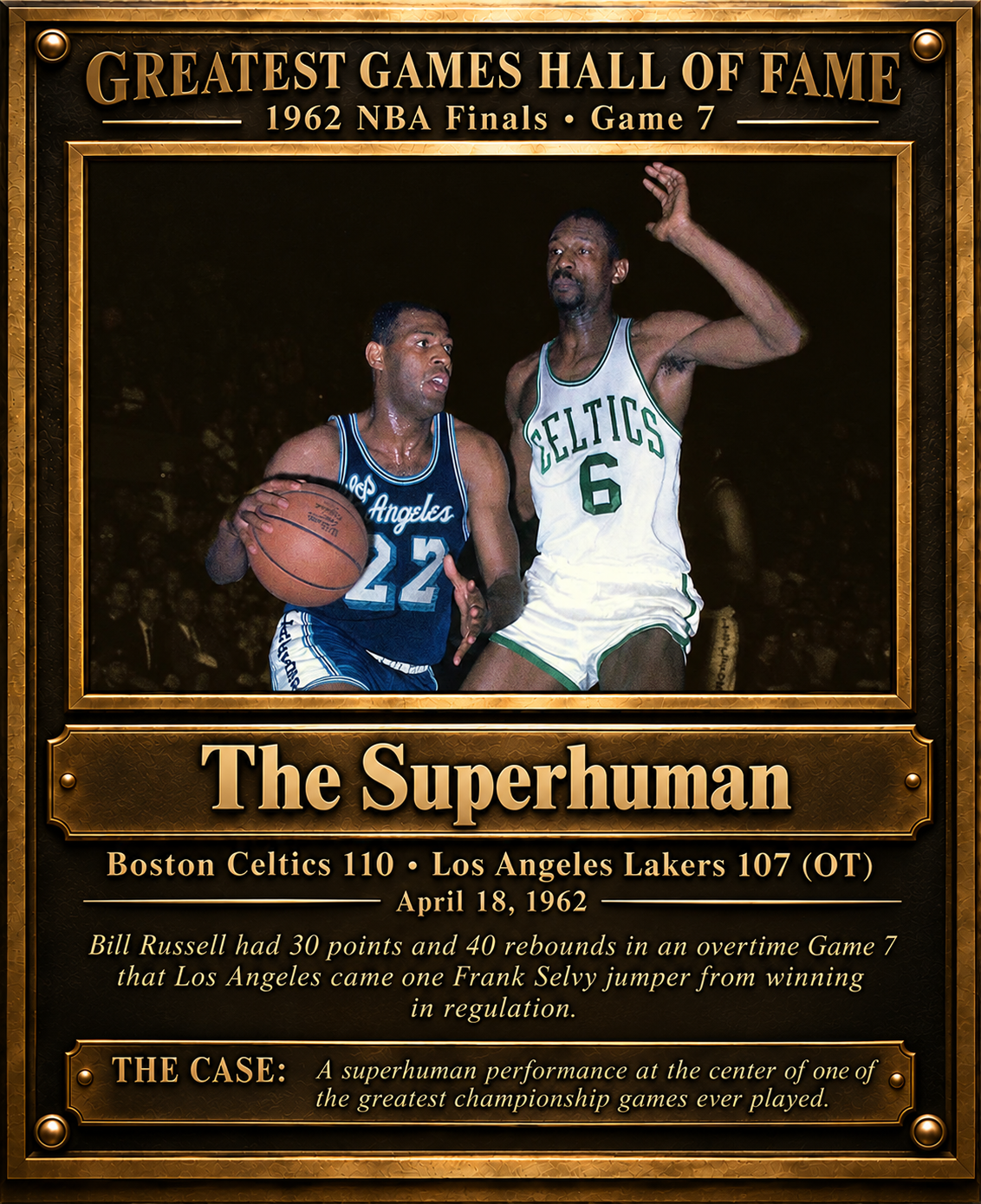
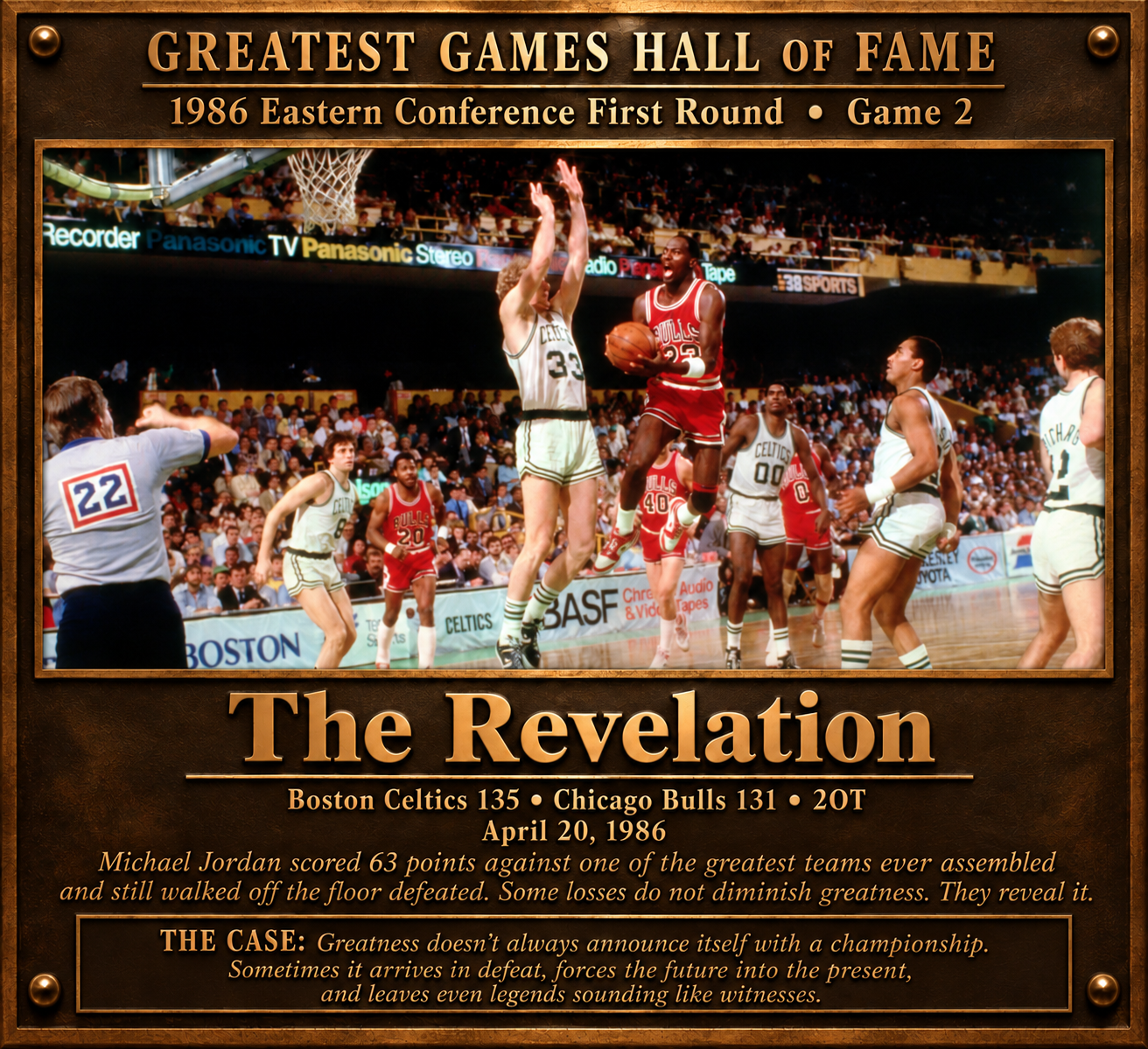
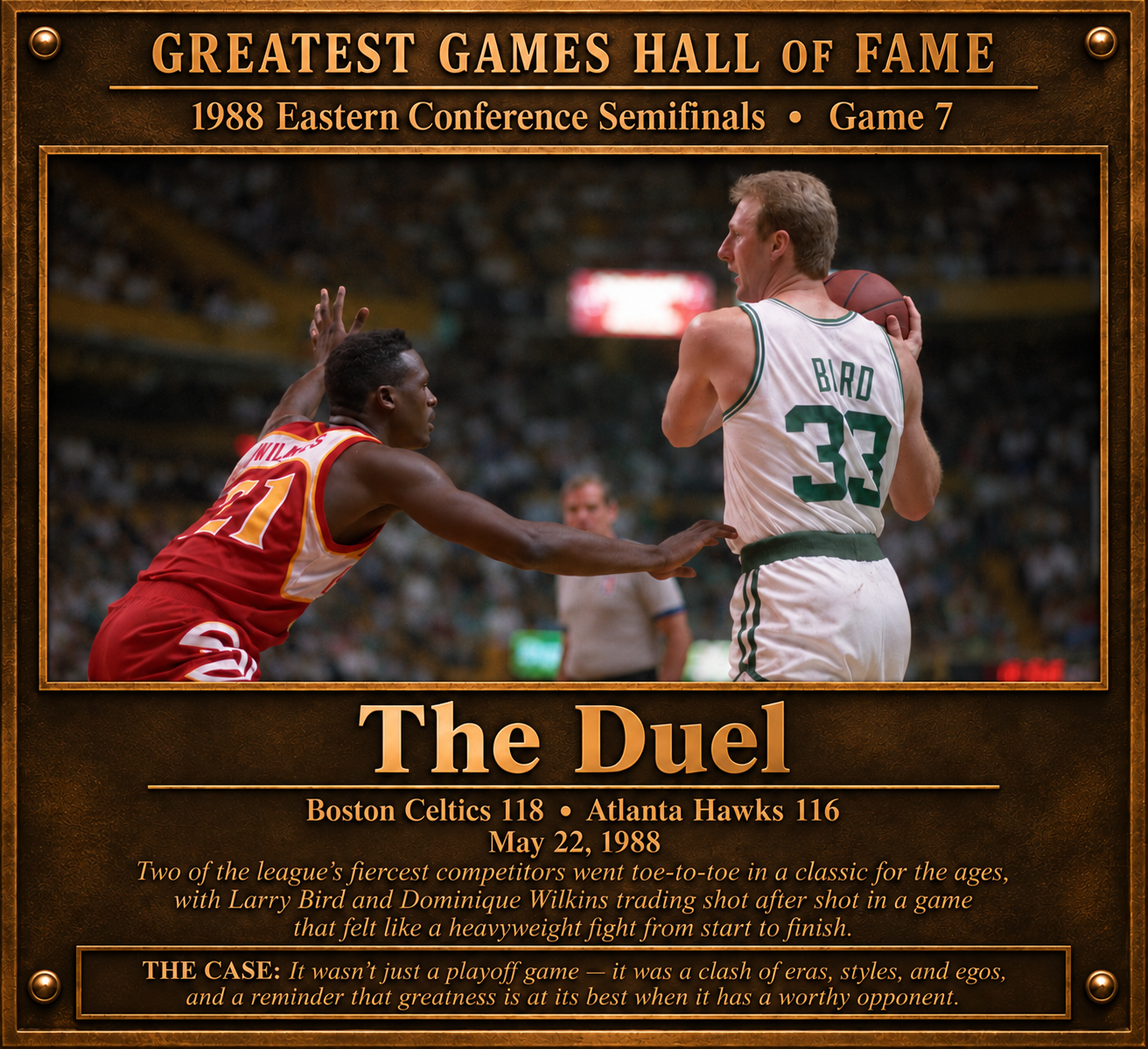
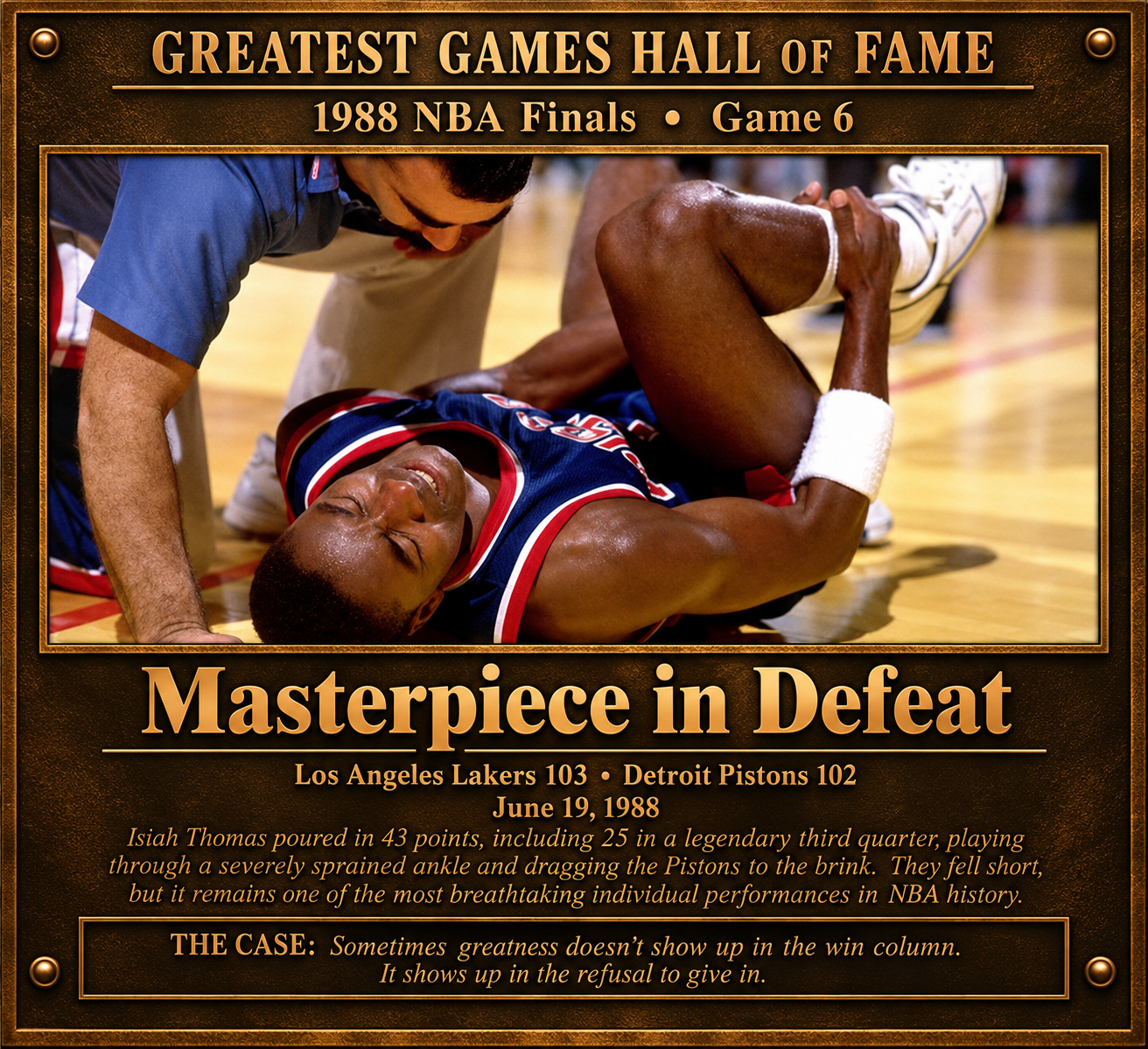
This is the Greatest Games Hall of Fame.
There are 31 games in the inaugural class. There are no first-ballot debates, no waiting periods and no statistical minimums. There is no requirement that a game must be a Finals game, a playoff game or even particularly well played. There is only one standard:
Is the history of great basketball games incomplete without it?
Also, please do not ask where the rankings are.
There aren’t any.
Instead, the Greatest Games Hall of Fame is complete with Wings.
Because once you stop asking which great game is greater and start asking what made each of them great in the first place, patterns begin to emerge. Some games refuse to end. Some belong to a player who grabbed the game by the throat. Some are remembered almost entirely through one immortal moment. Some arrive carrying so much history, rivalry and consequence that the score alone cannot explain them.
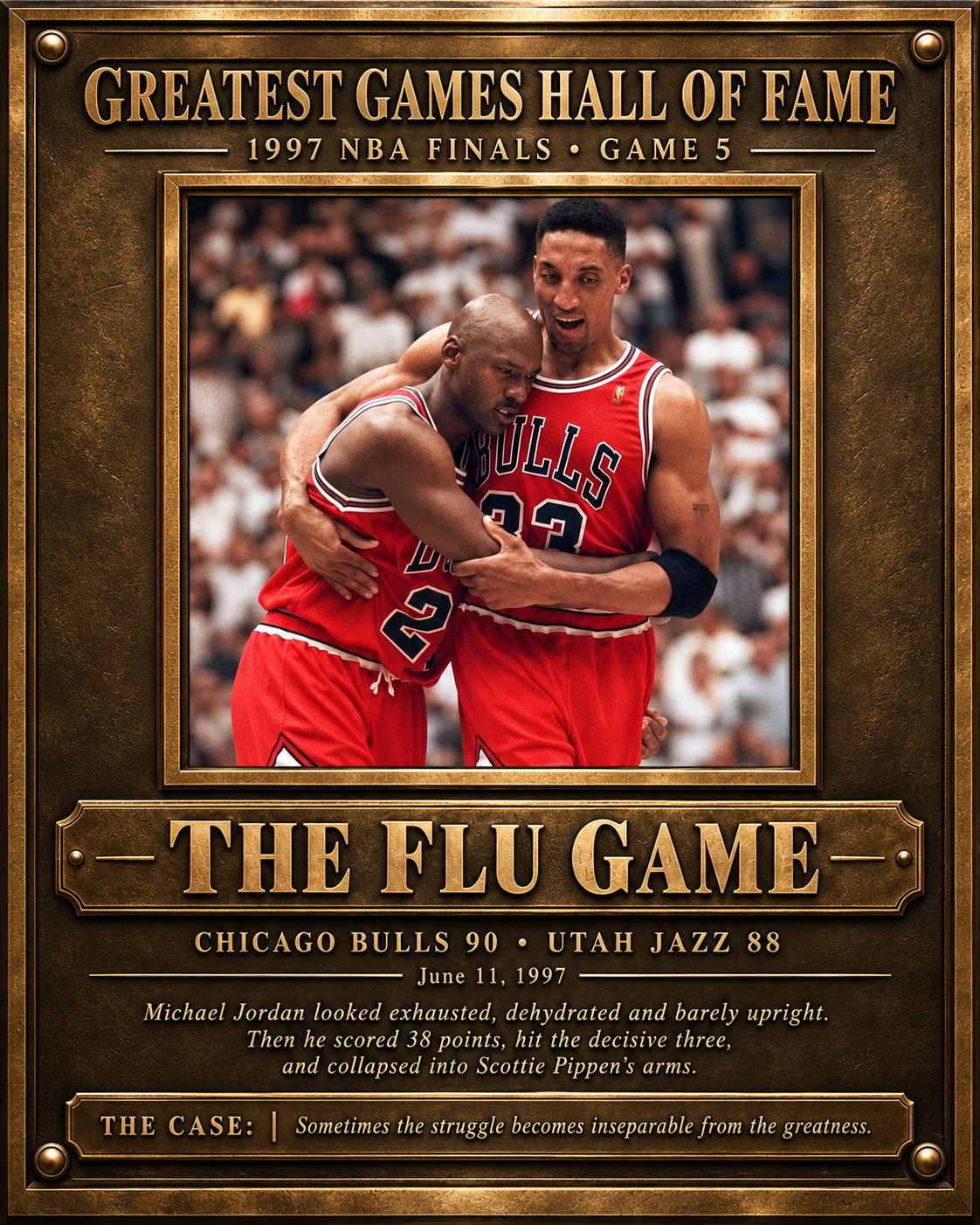
These are not rigid classifications. Great games tend to trespass and step into multiple wings. The Flu Game could easily live in more than one room. Game 7 of the 2016 Finals could demand its own floor. The categories are not definitions of greatness so much as different entrances into it.
And before any of them, sitting alone at the front of the Hall, is the game that gave us the idea in the first place. Not because it defeated every other game in some imaginary tournament for supremacy.
Because it taught us that there was never supposed to be only one.
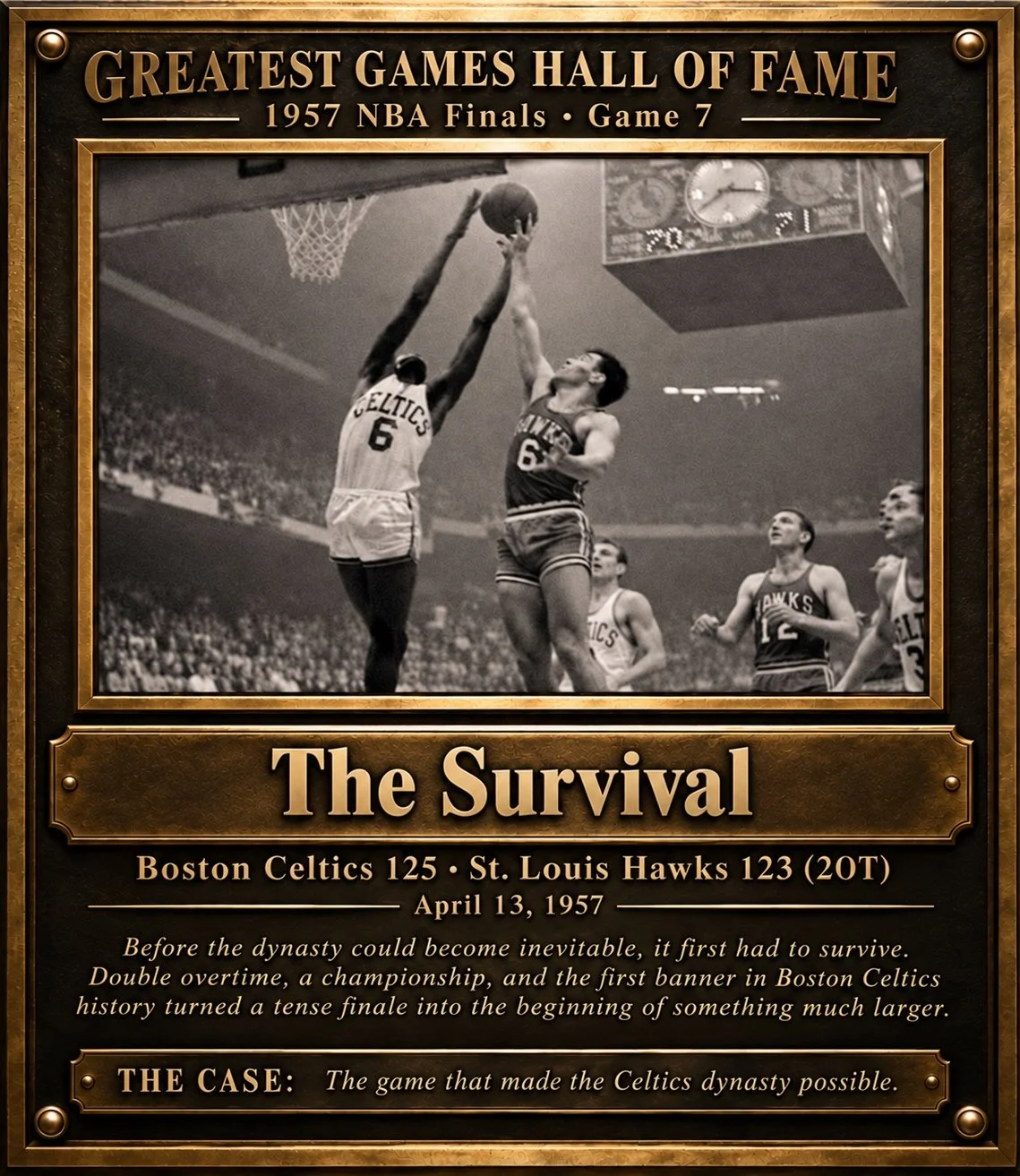
When the game refused to end
Some games become great because they are played beautifully. Others become great because neither side seems physically, emotionally, or spiritually capable of allowing them to end. Overtimes pile up. Legs get shaky. Strategy gives way to survival. Eventually the game stops asking who is better? and starts asking who is still standing?
WHEN THE STARS BURNED BRIGHTest
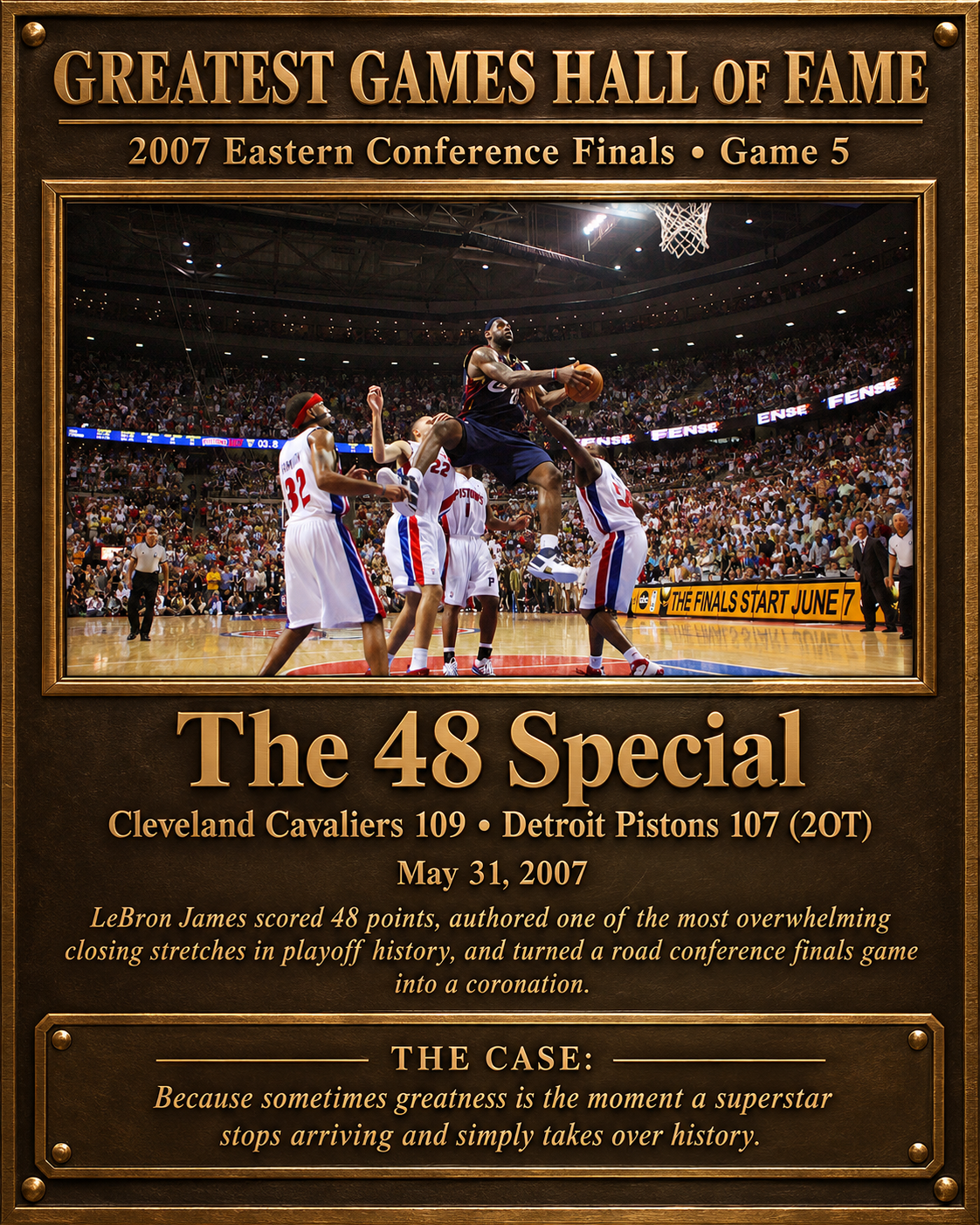
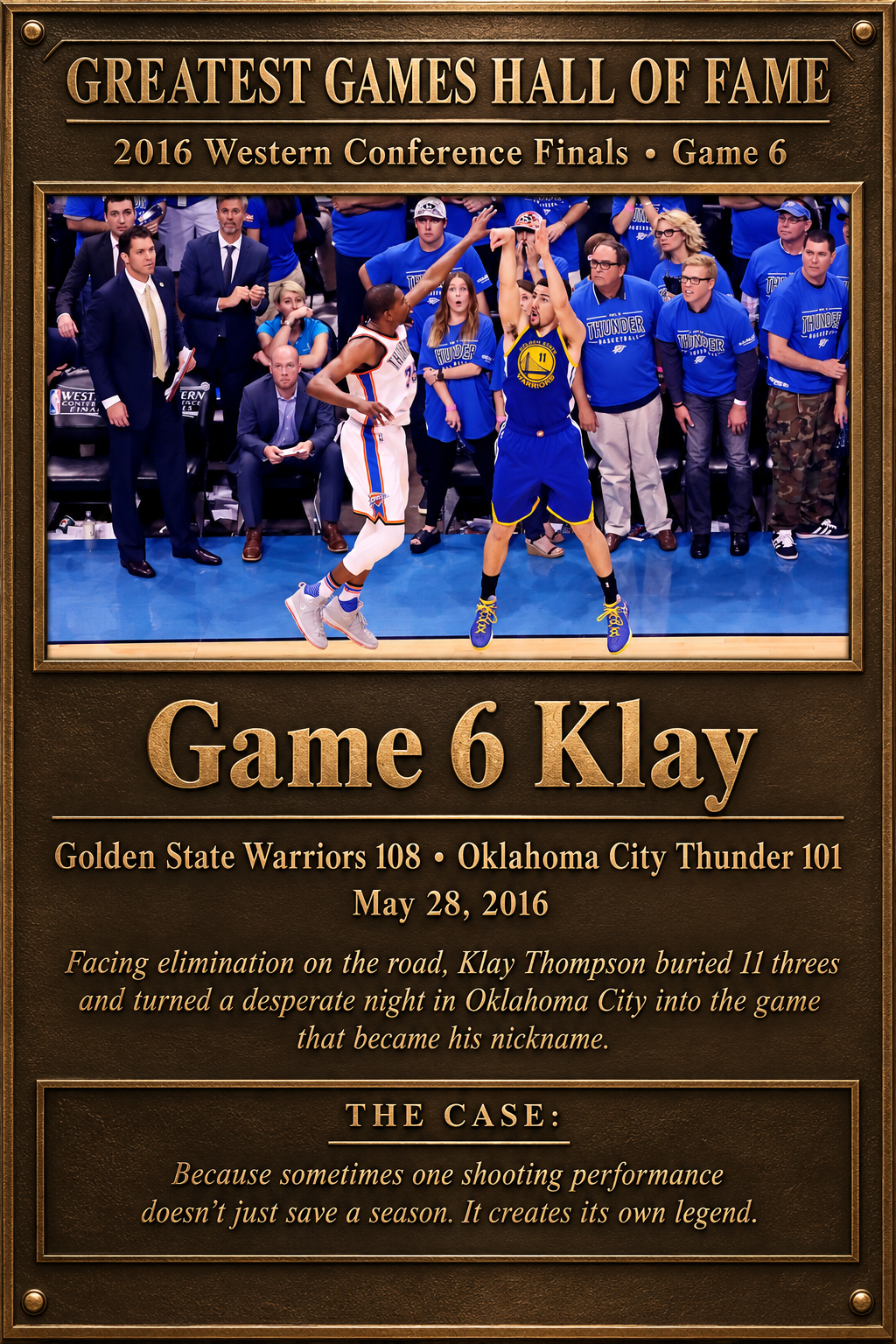
Every so often, a basketball game becomes the setting for somebody to do something that temporarily makes the sport look too small for them. The numbers stop sounding reasonable. The shots stop looking repeatable. The performance becomes less about winning a game and more about watching one person stretch the boundaries of what we thought was possible on a basketball court.
WHEN ONE MOMENT BECAME THE WHOLE GAME
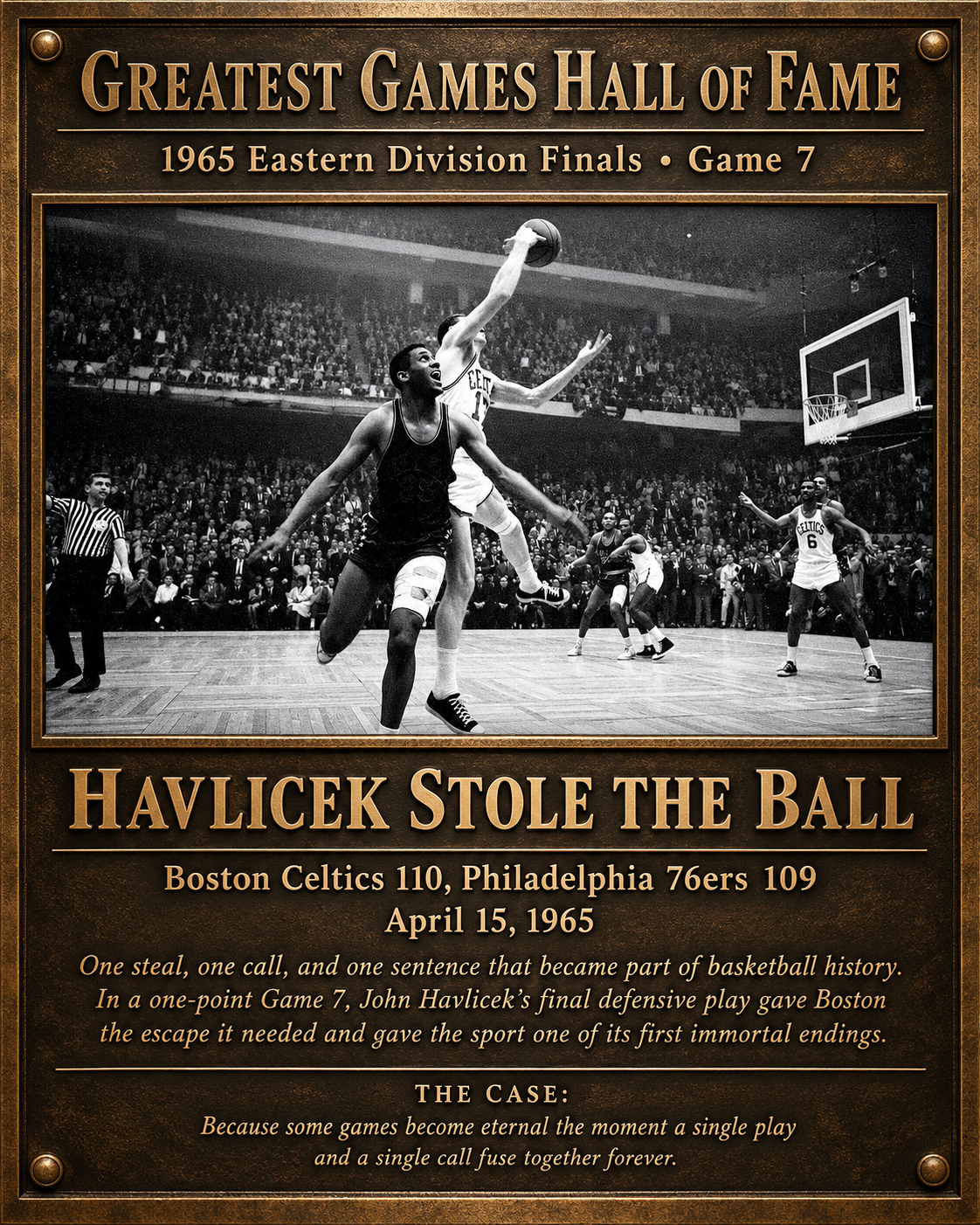
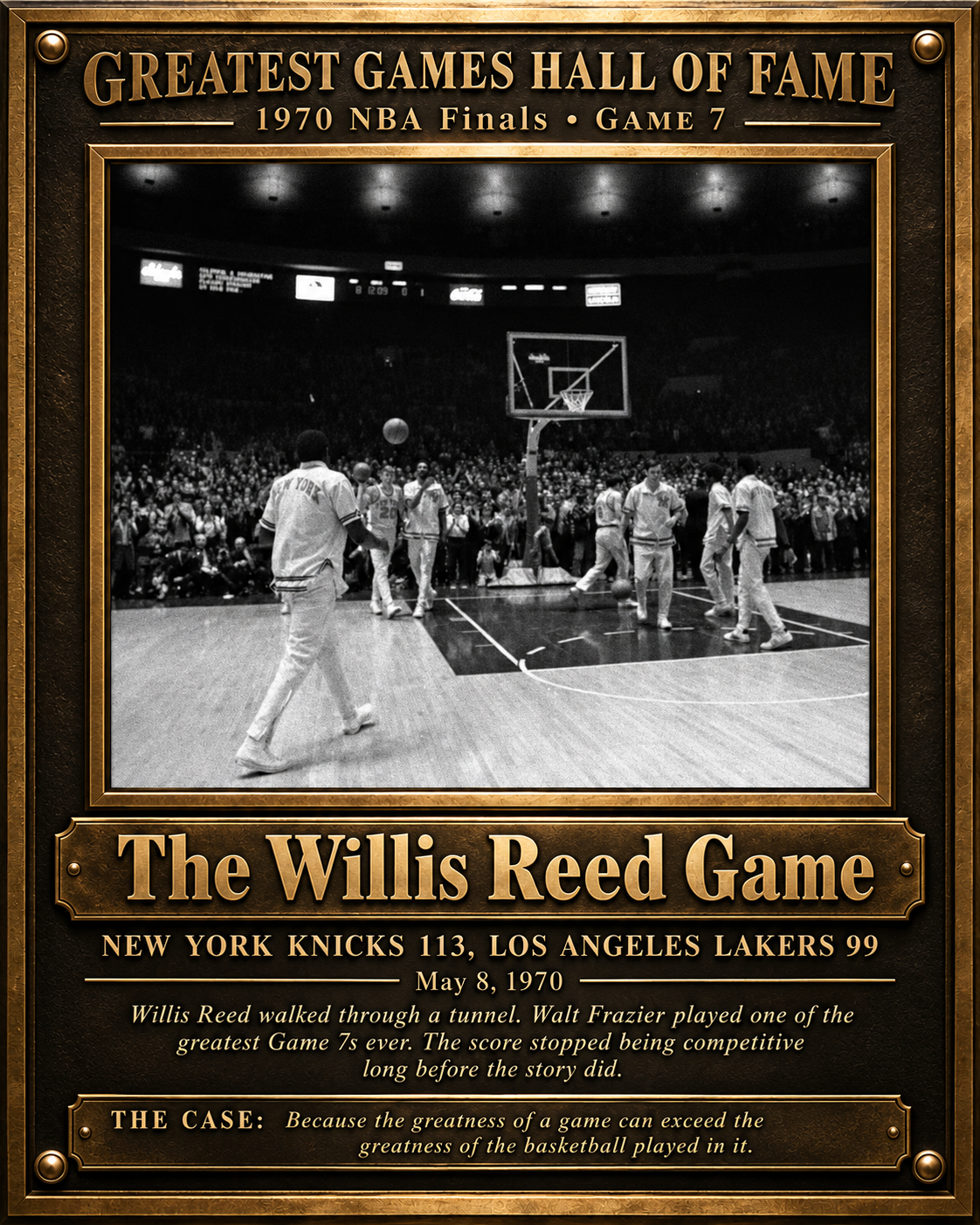
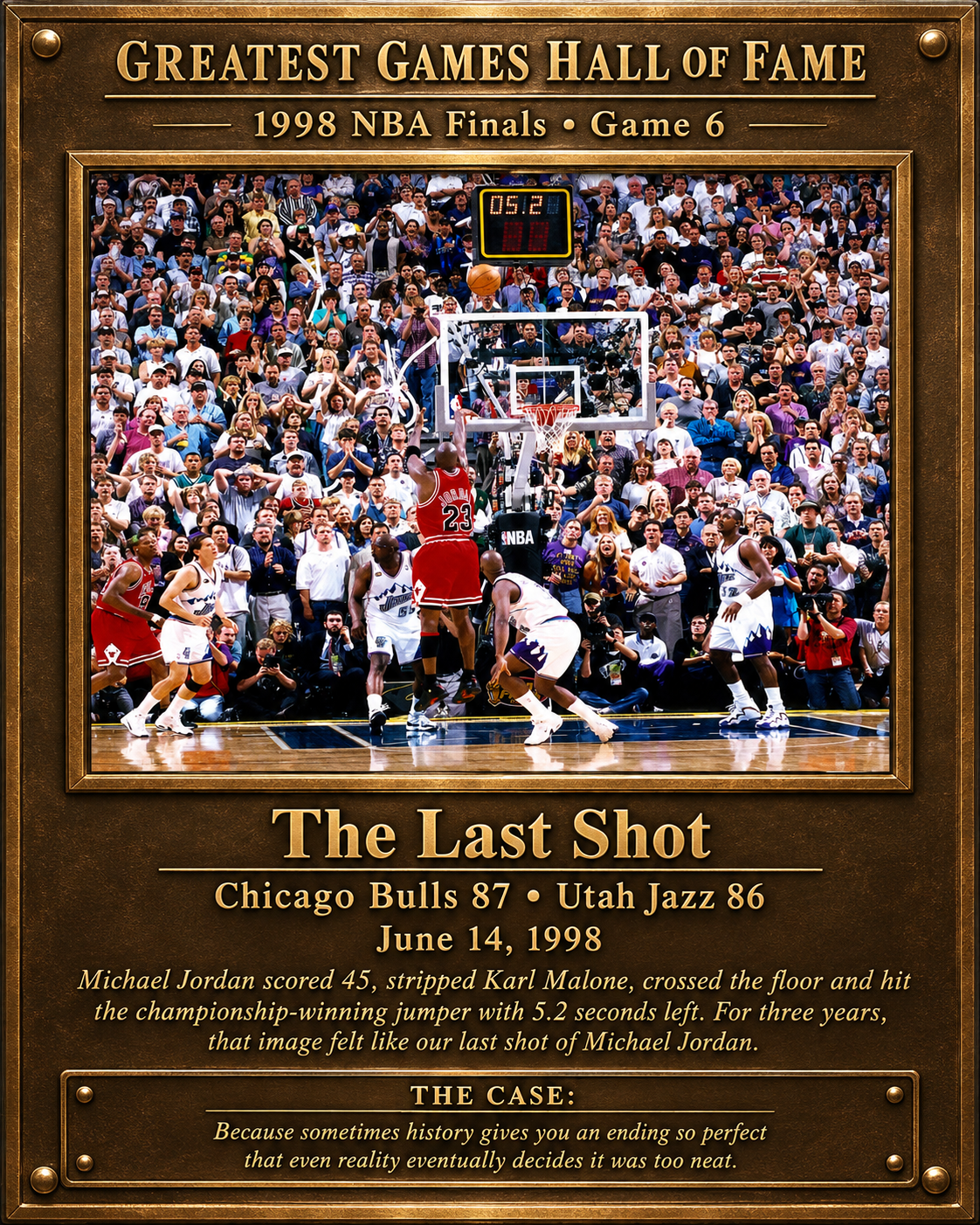
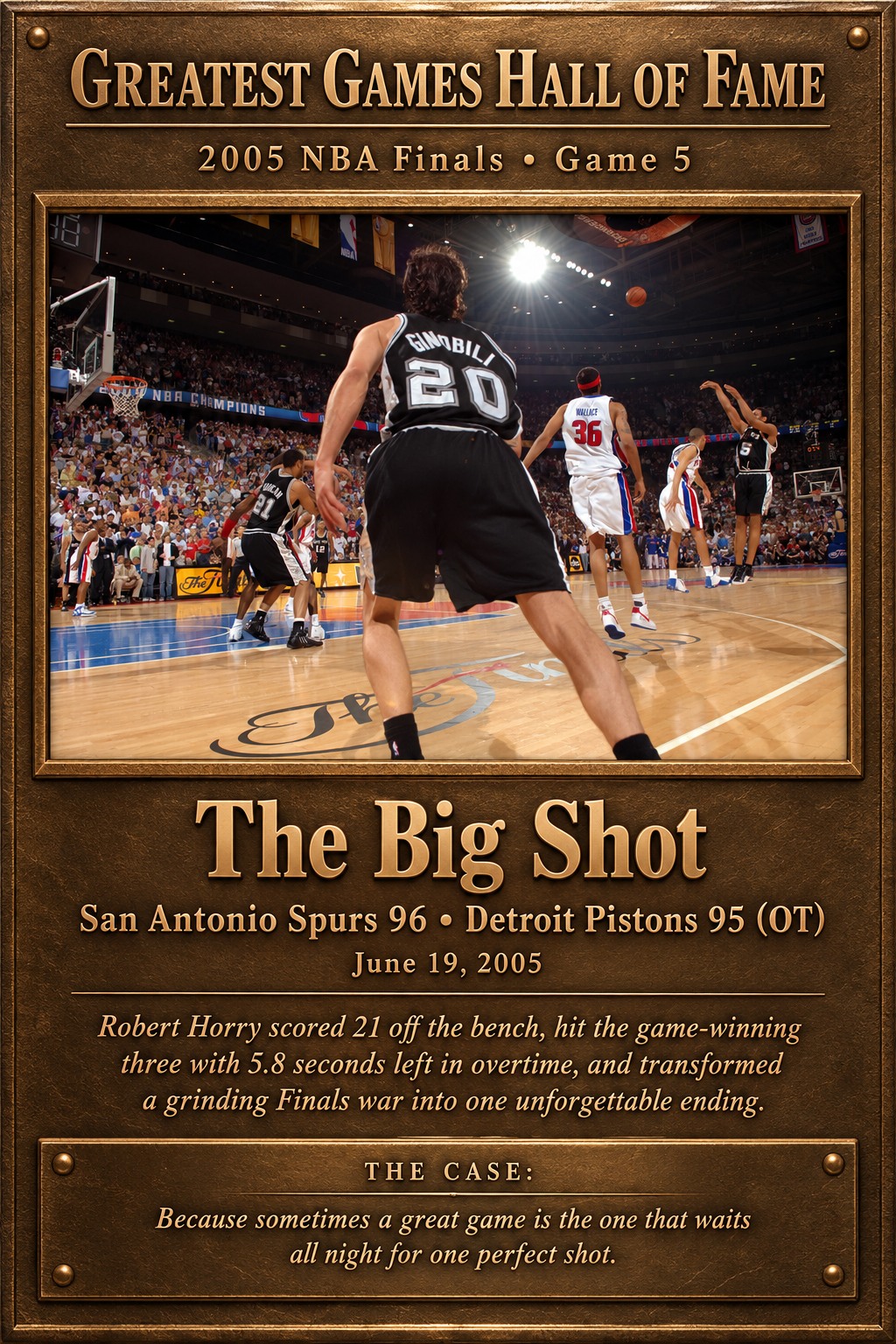
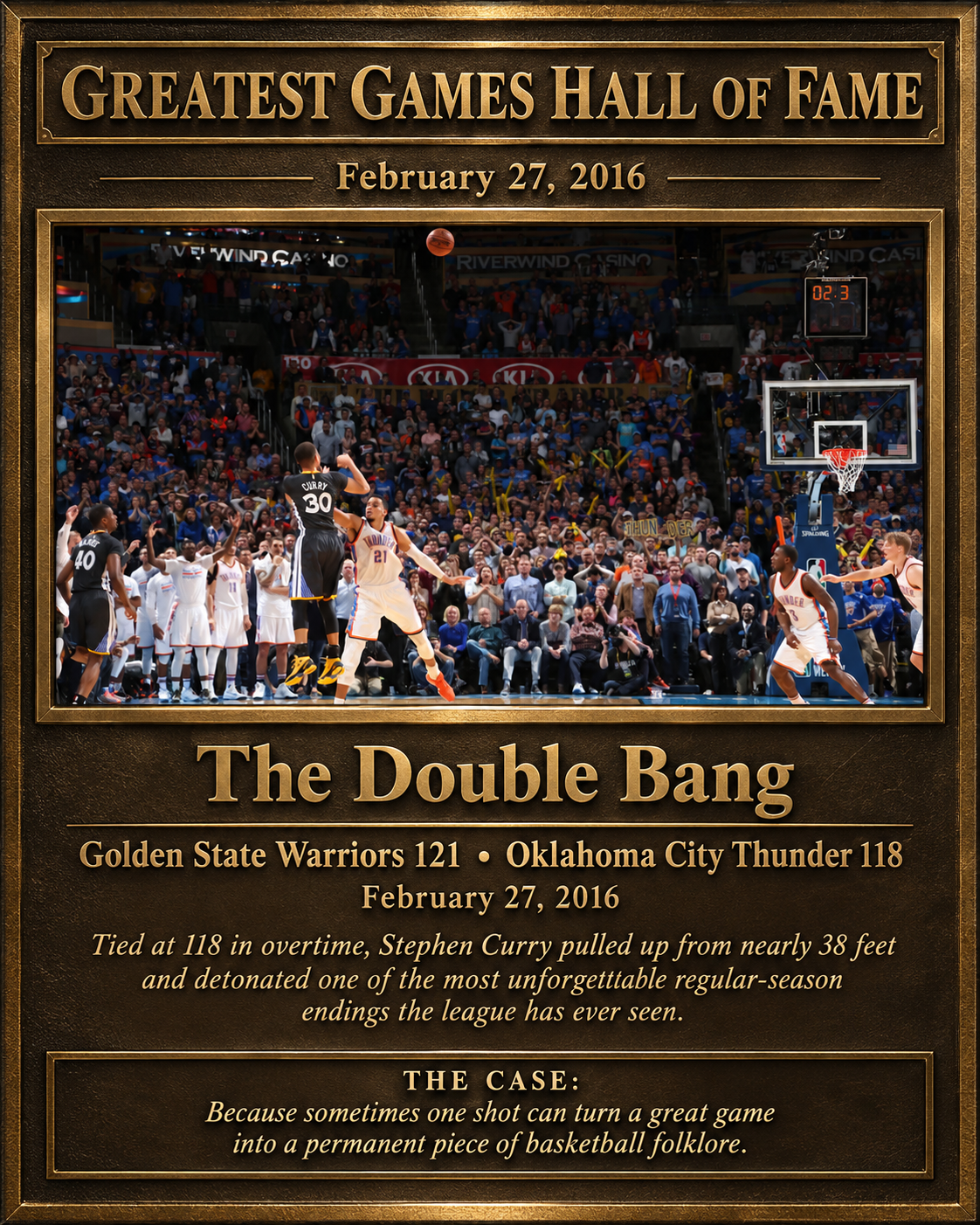
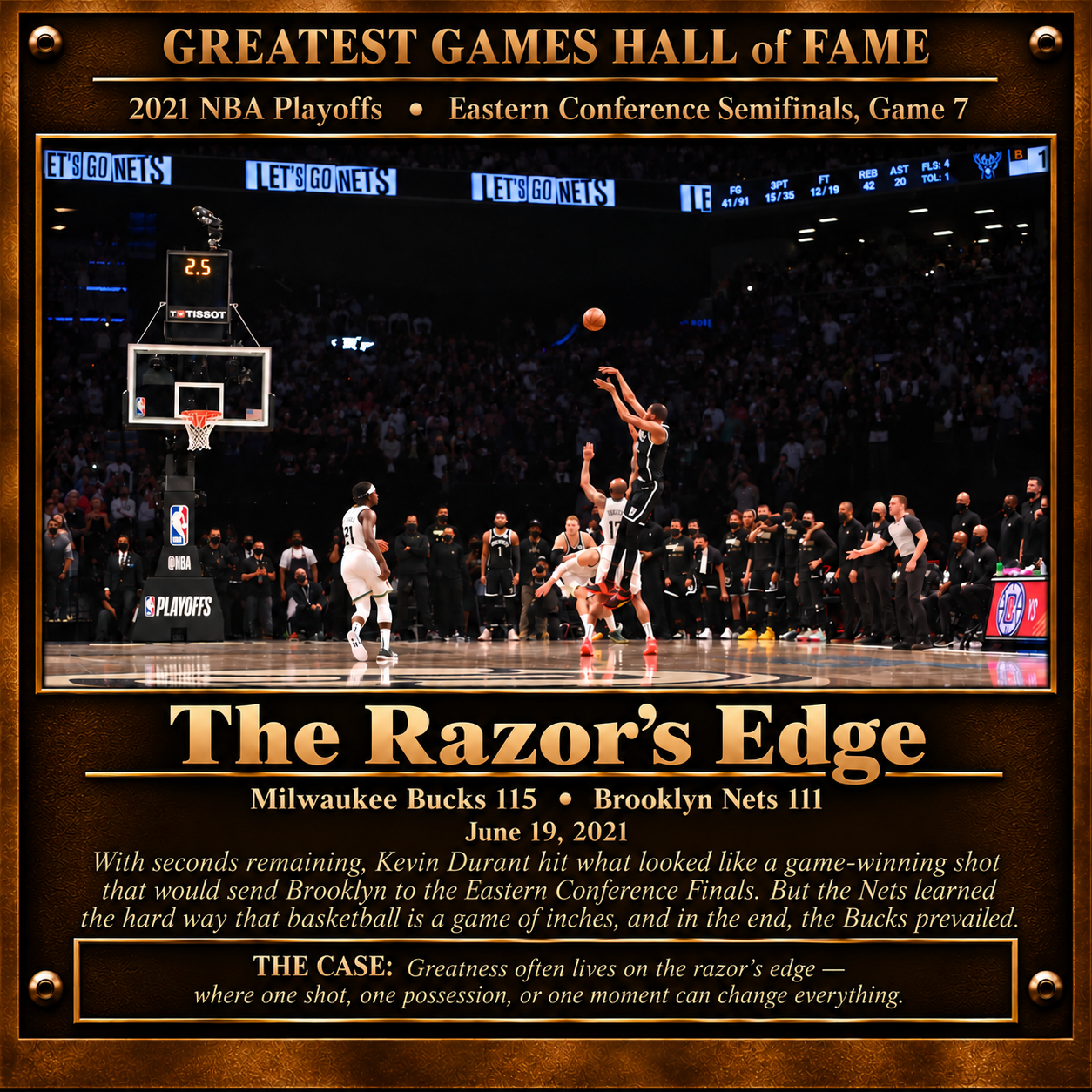
Most basketball games are remembered as collections of possessions. These are remembered as photographs. A steal. A shot. A pose. A foot on a line. One instant becomes so powerful that it swallows the other 47 minutes and turns an entire game into a single image basketball fans can summon on command.
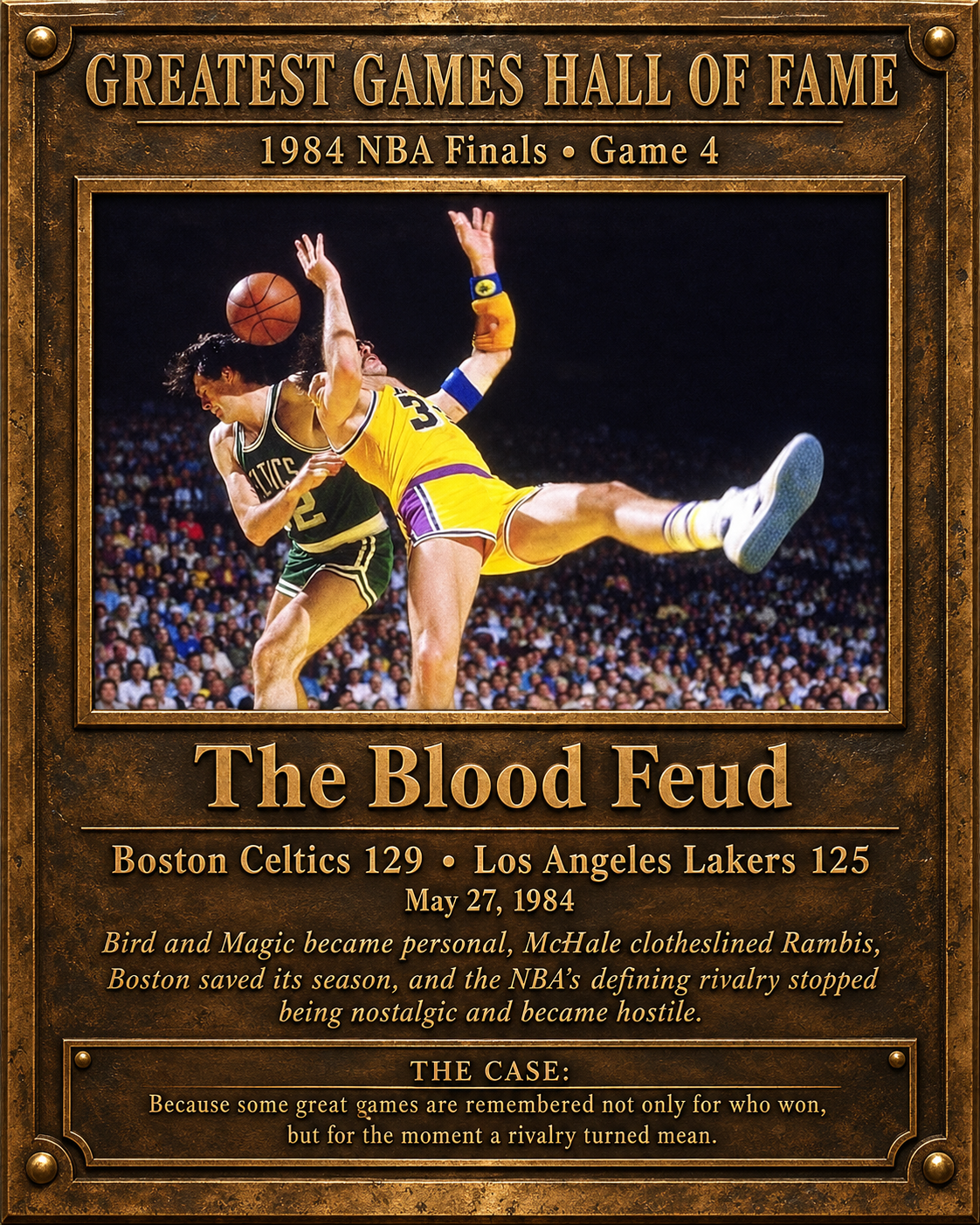
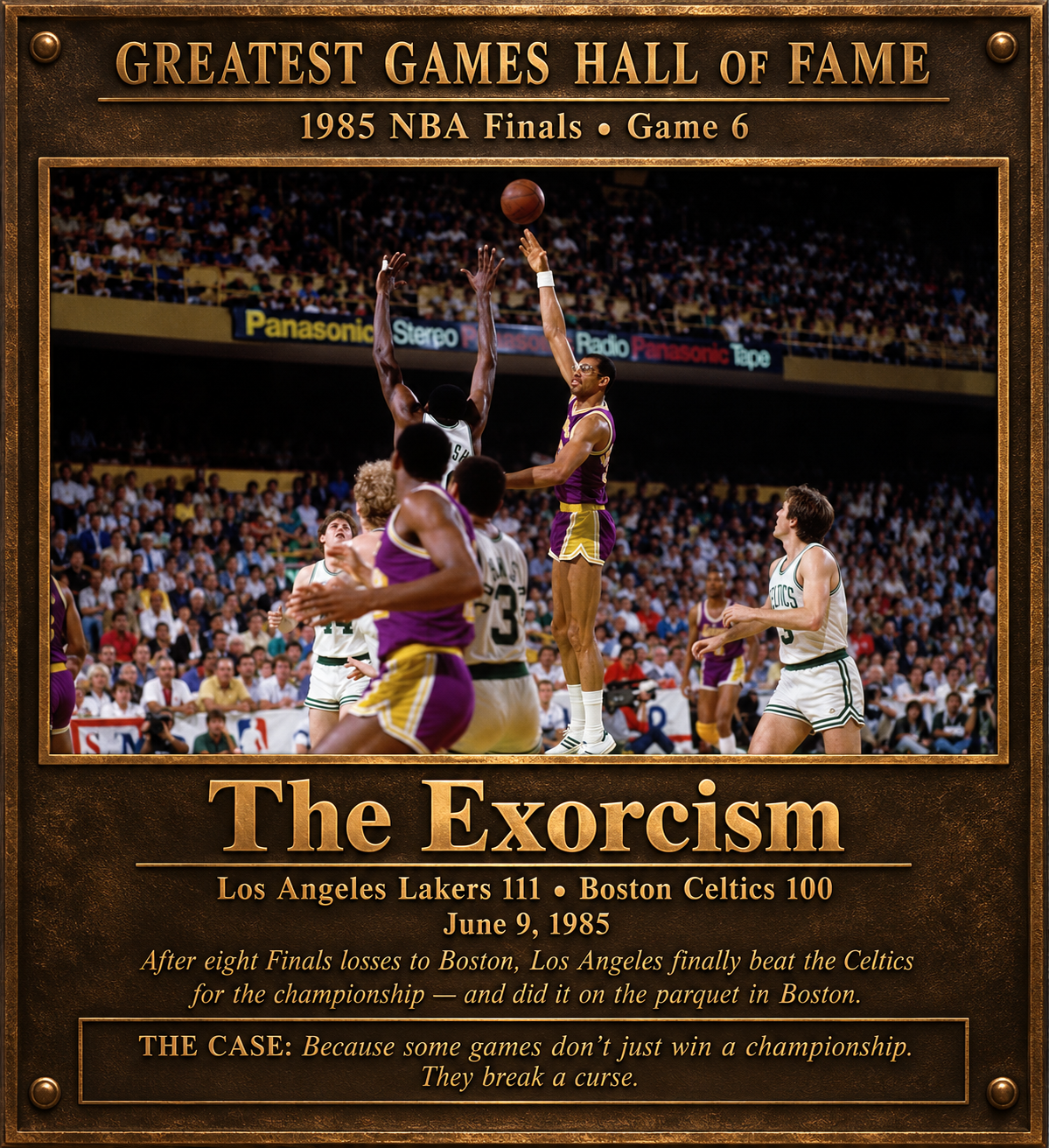
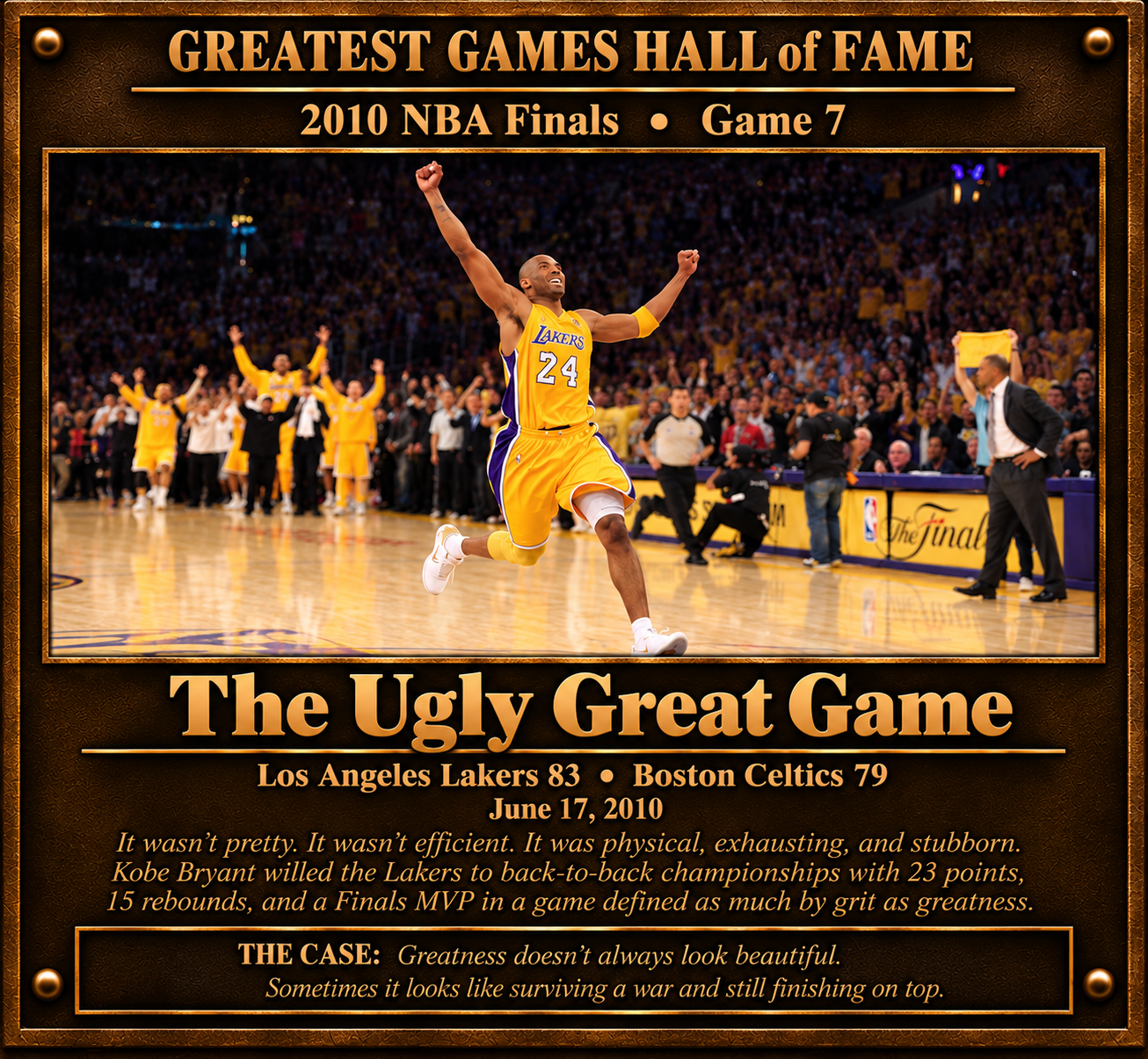
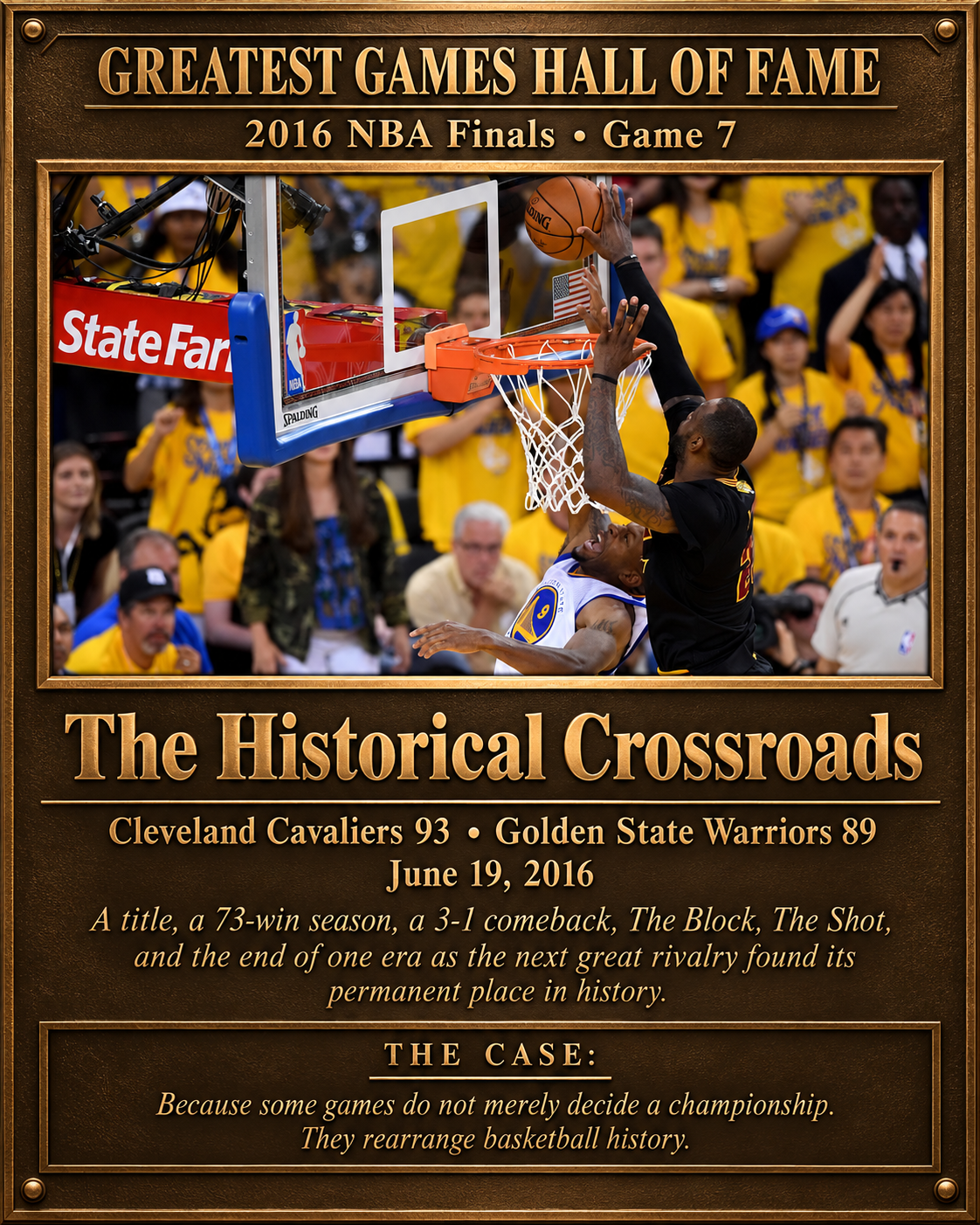
WHEN THE GAME CARRIED MORE THAN THE SCORE
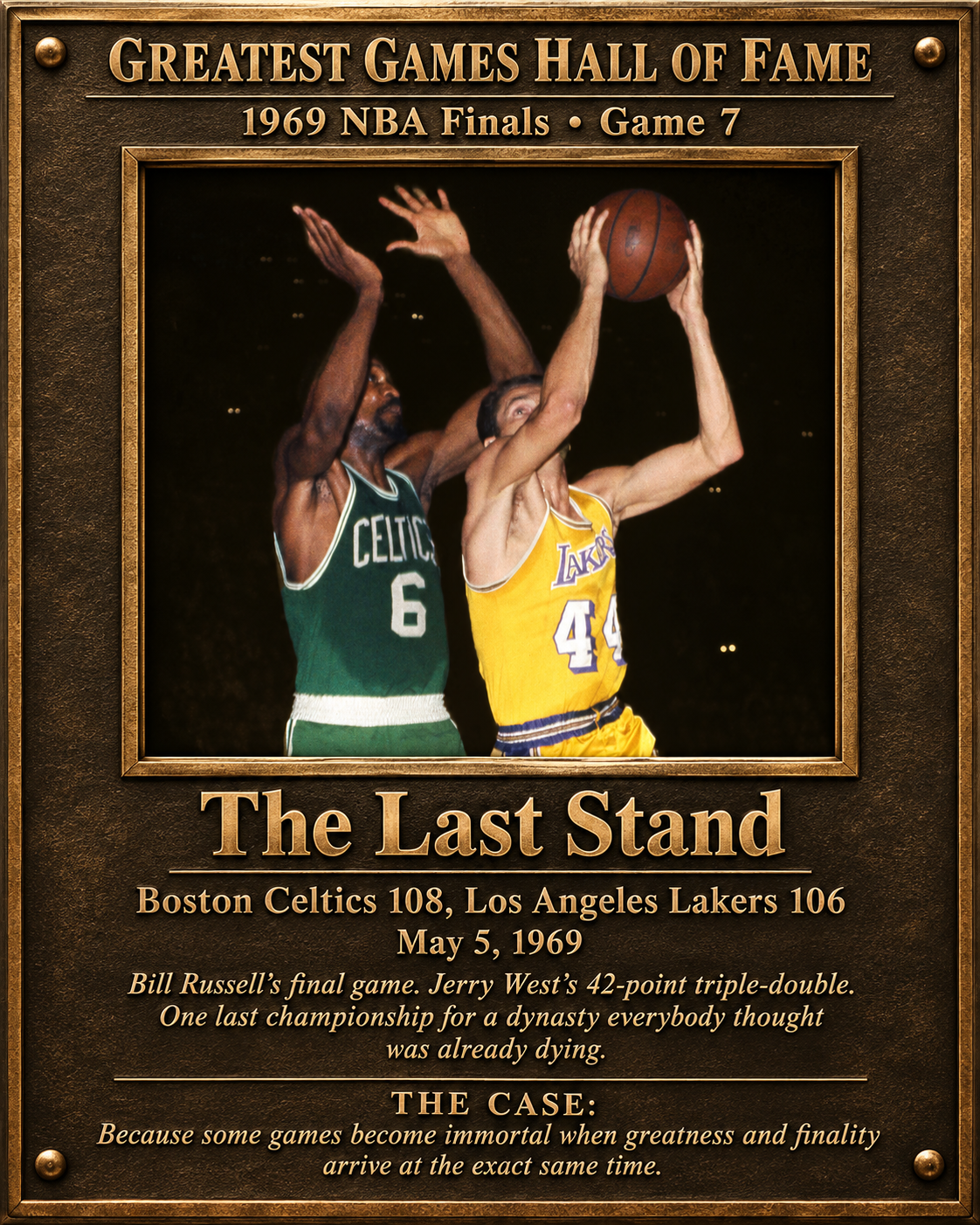
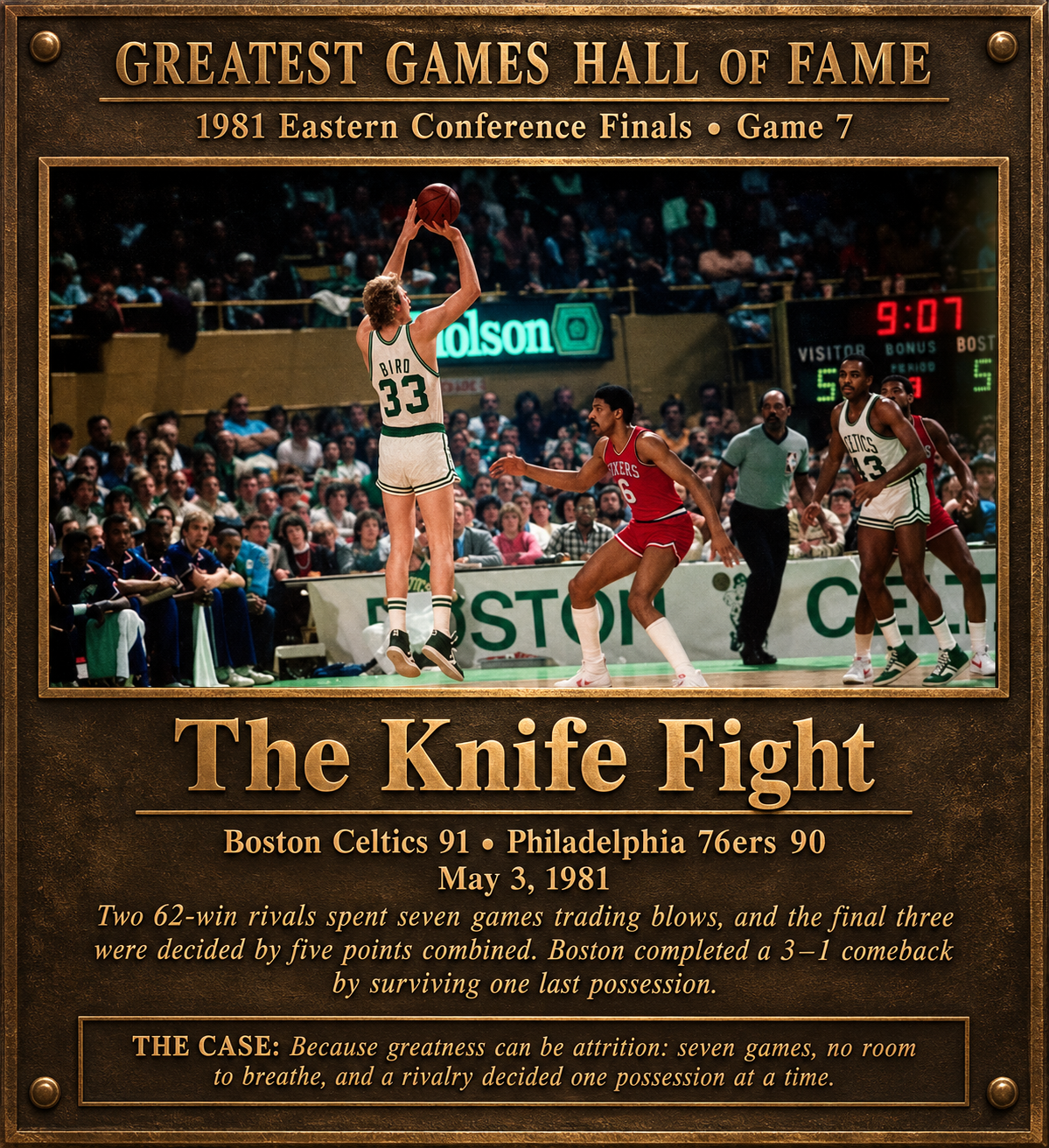
Some games arrive already burdened with history. Rivalries, championships, dynasties, ghosts, old wounds, unfinished business — all of it is already on the floor before the opening tip. In these games, the basketball matters enormously, but so does everything the basketball has been asked to represent.
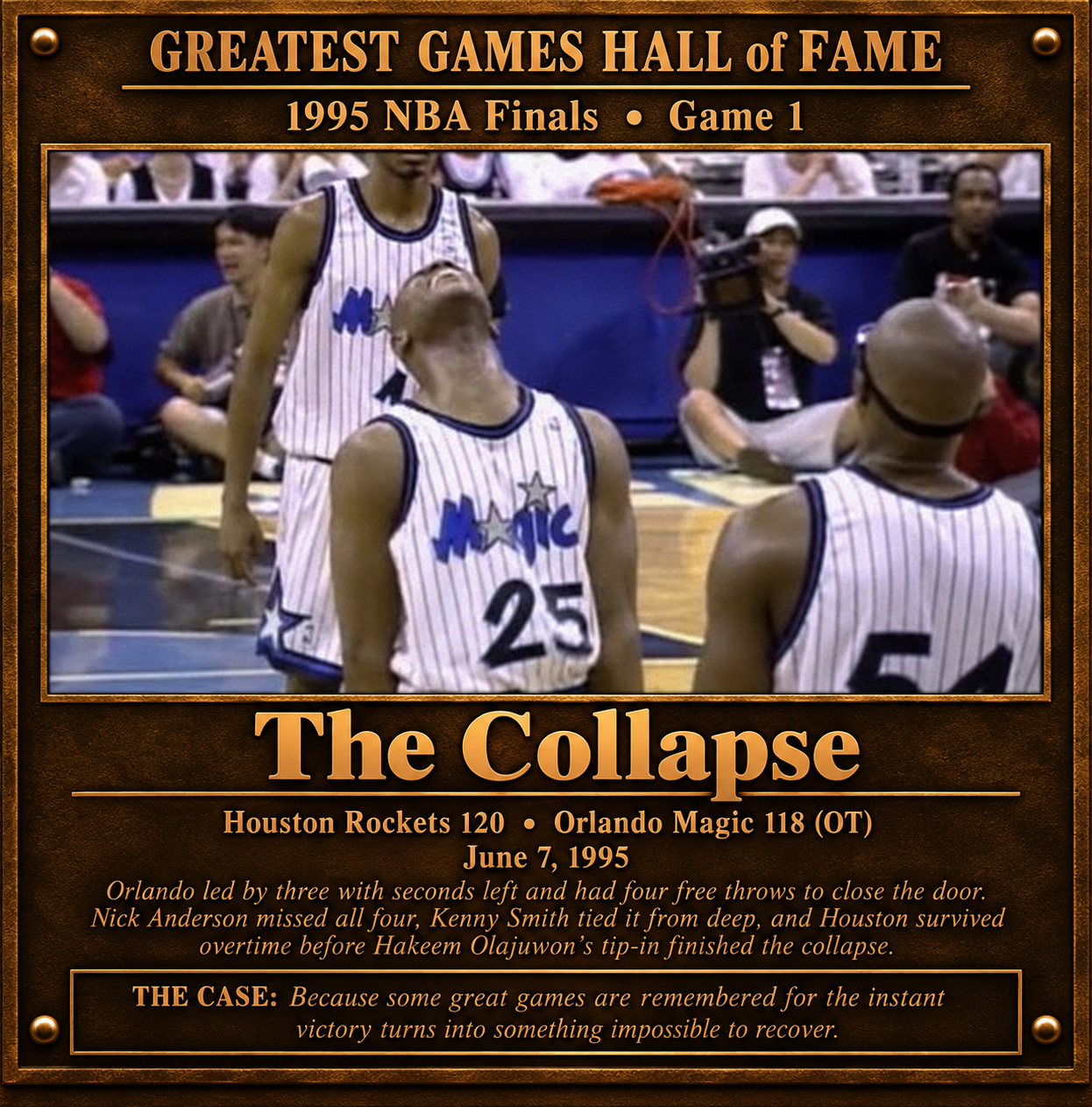
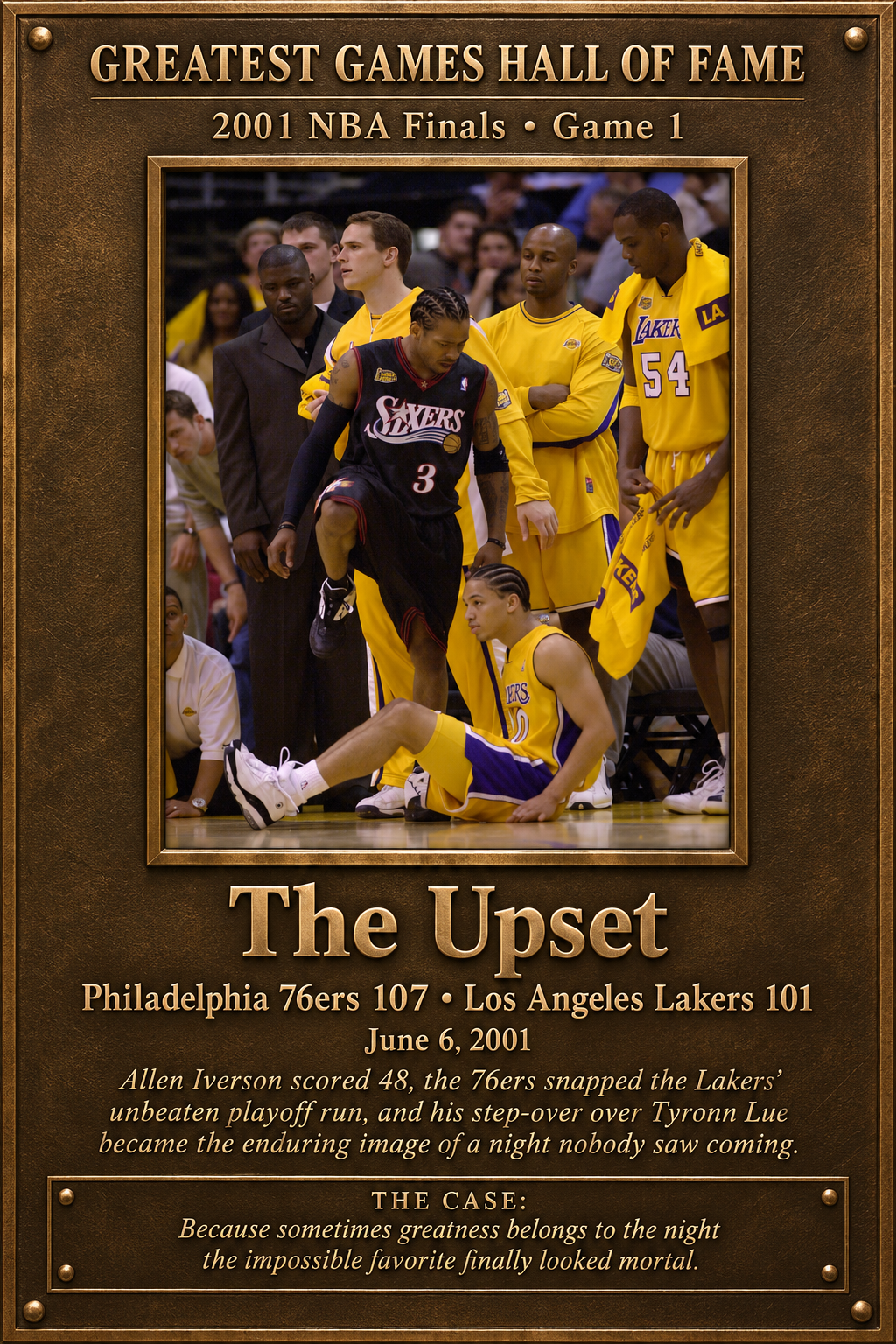
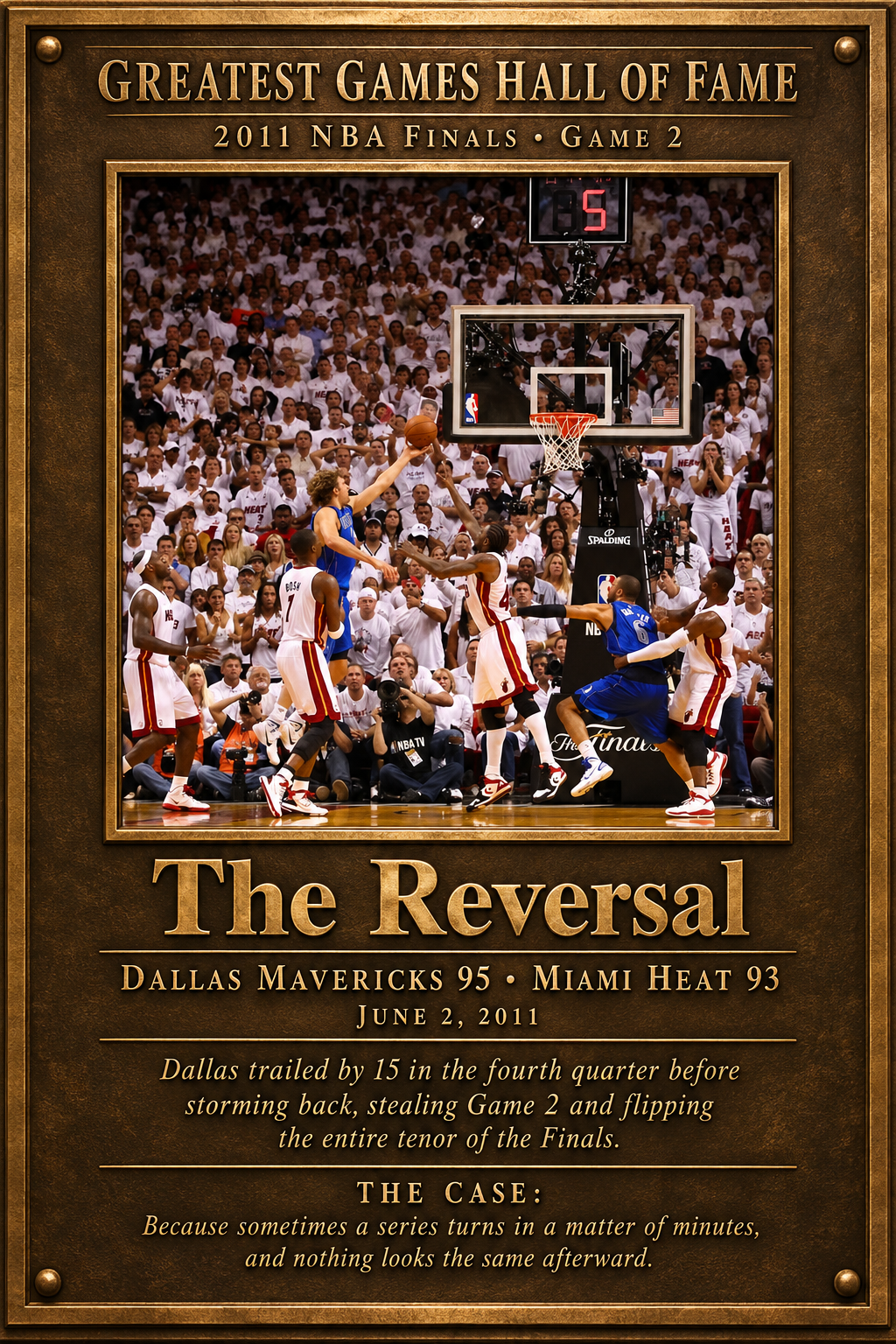
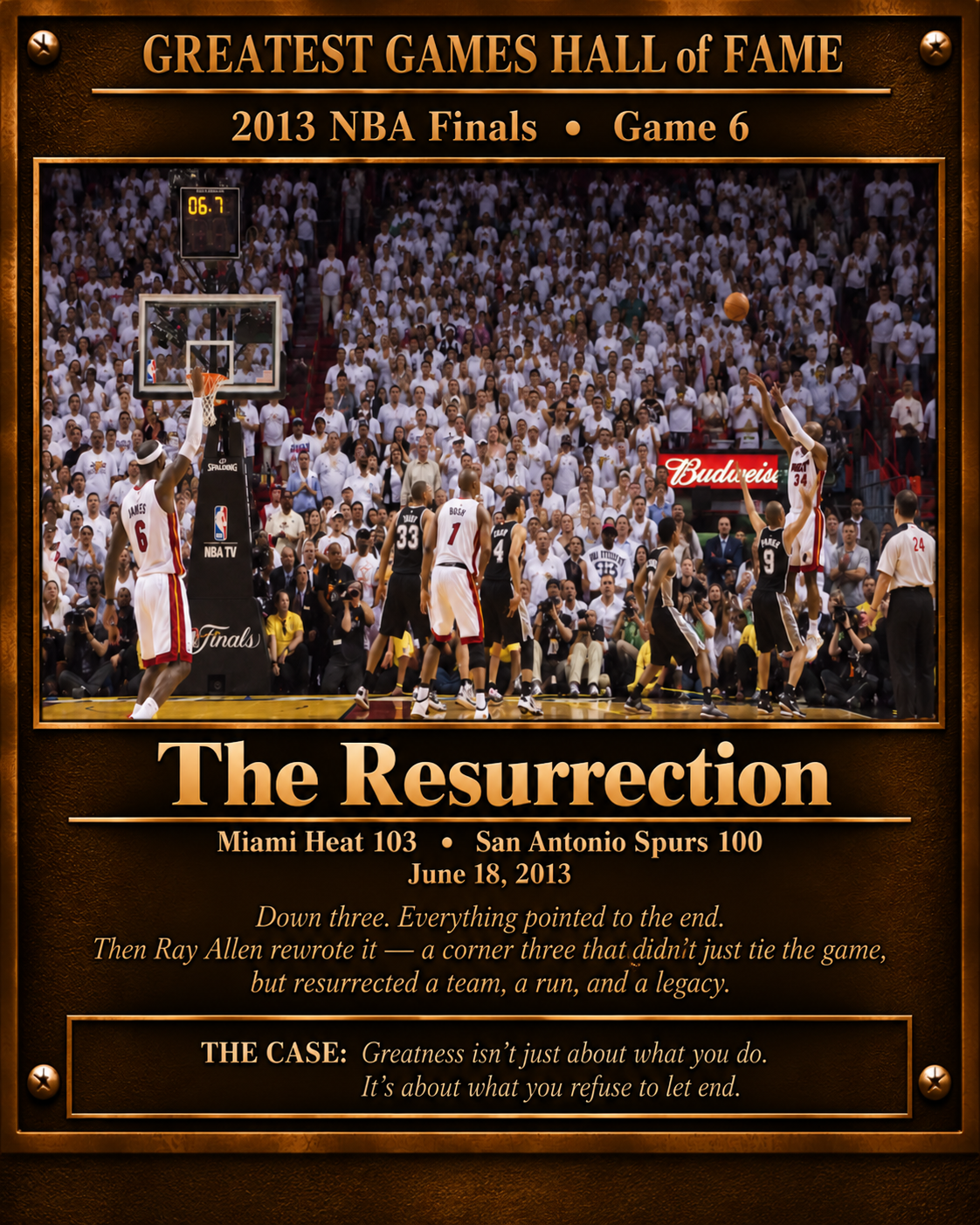
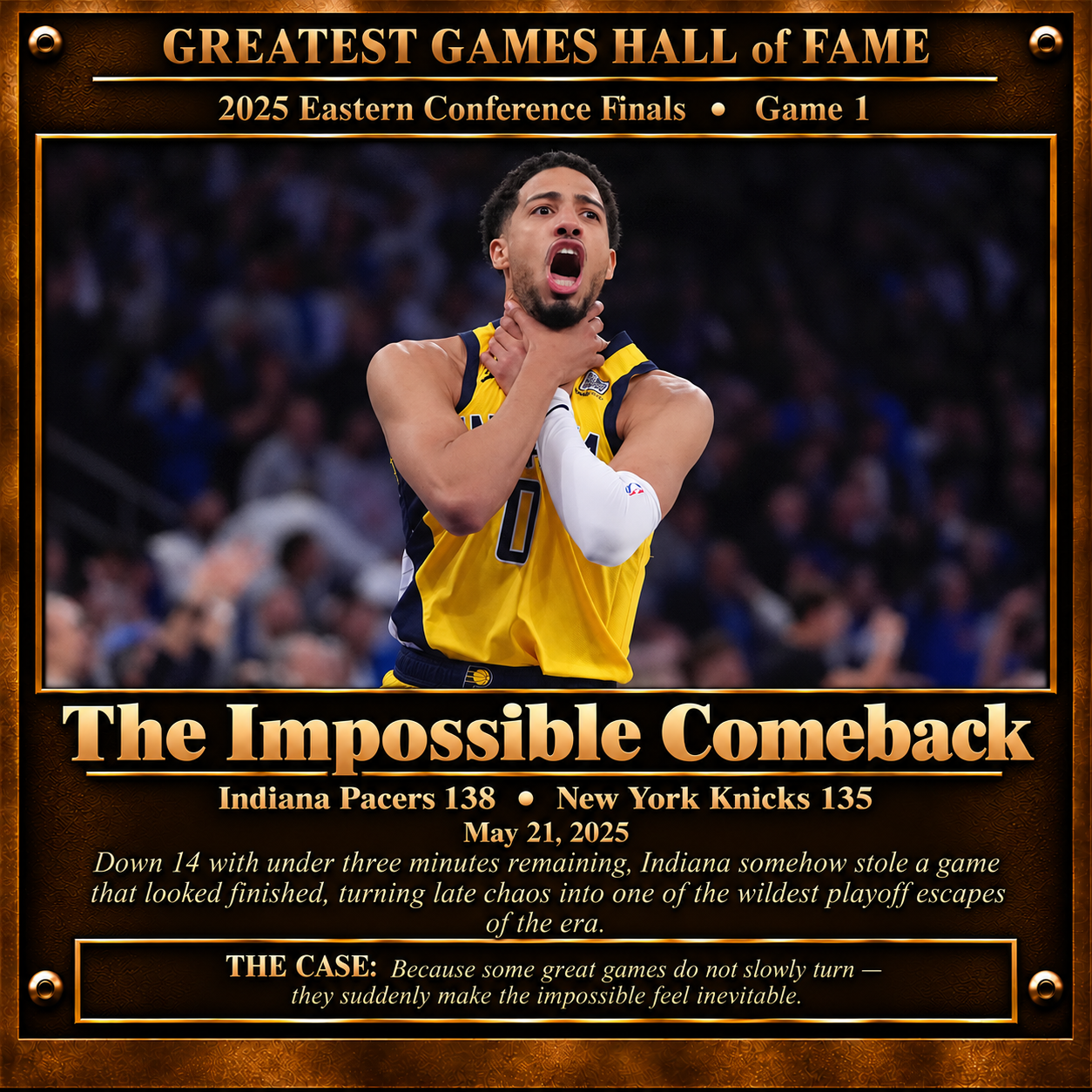
WHEN EVERYTHING TURNED UPSIDE DOWN
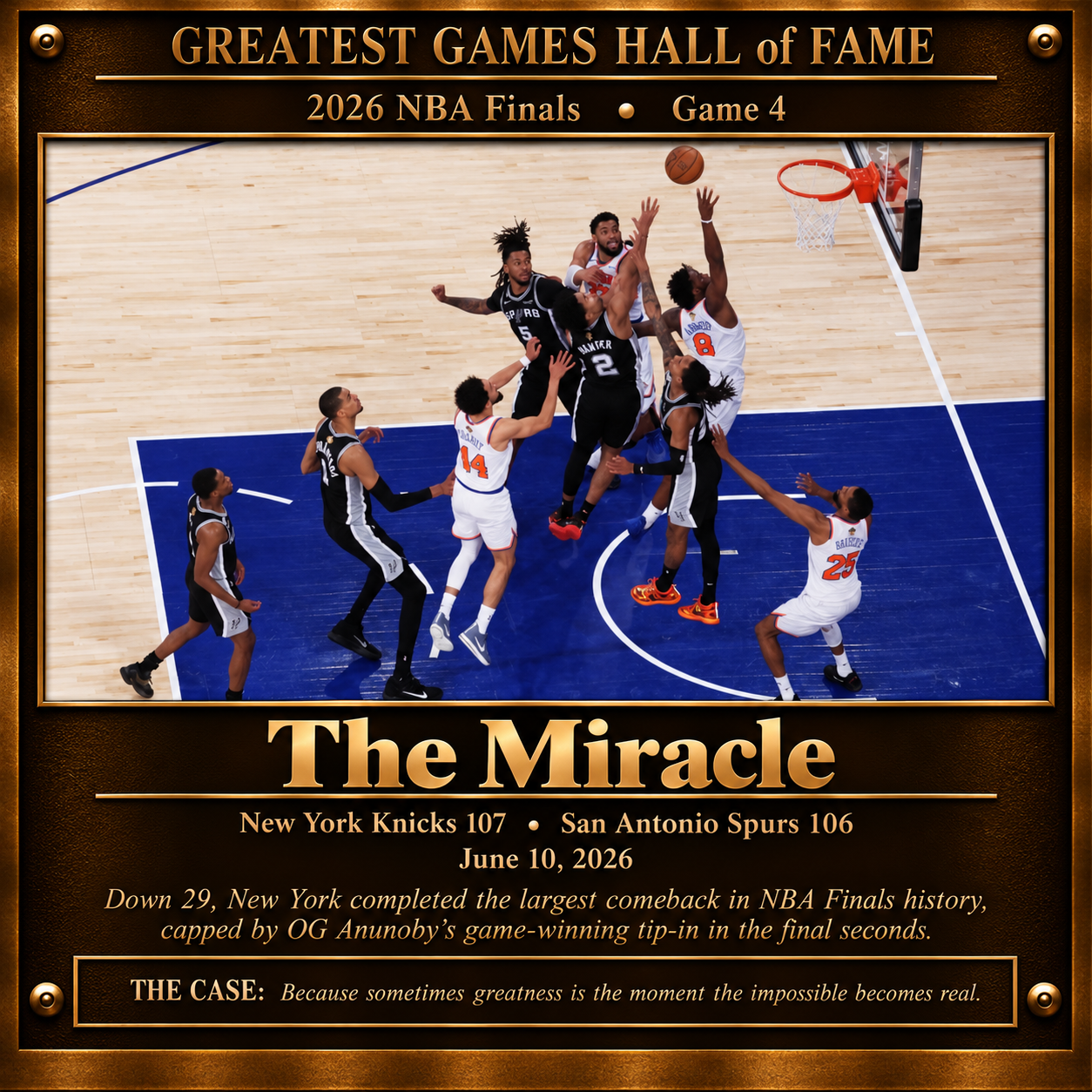
These are the games that convince you the story is over before ripping the ending out of your hands. A lead feels safe. A favorite looks inevitable. A championship is seconds away. Then one sequence changes the temperature, certainty disappears, and by the time the final horn sounds, the game means something completely different than it did five minutes earlier.
Next Up on Throwback Tapes: ‘12 Angry Men’ (October 29)